
Pioneering Napier health research shaping the future of patient care



Meet the researchers in Edinburgh Napier University who are at the frontier of new research in health here in Scotland.
The university’s School of Health is celebrating 30 years of excellence, innovation and enterprise this year.
And it is looking to the future with plenty of new research underway that places patients at the heart of the work.
Their focus is on applied research, which means using knowledge to solve real-world problems. And it’s of the highest calibre: two-thirds of research it submitted to the last Research Excellence Framework was judged to be either world-leading or internationally excellent.
We take a look at some of the ground-breaking studies led by three academics at Edinburgh Napier University.
Listening to the needs of people with dementia
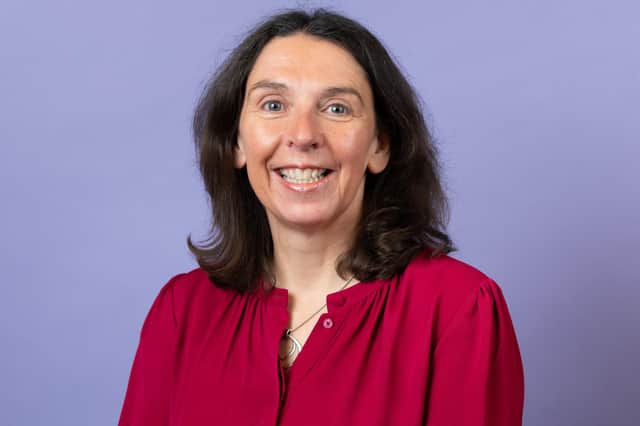
Fiona Maclean, Professor of Occupational Therapy, is doing research with people living with dementia, their families and caregivers to explore the potential use of robotic technology in occupational therapy-led rehabilitation in dementia.
Some of the findings are about to be published in what is one of the first studies in the UK to explore occupational therapists' views on the current and potential use of multifunctional robots in dementia and rehabilitation.
The study was set up to listen to the views of people living with dementia, their caregivers and supporters. “Their voices are steering and contributing to that wider debate about how and in what way technology could be adopted. Part of the difficulty is that we might be developing technology at a rapid rate, but all too often we're not asking the end user, the people living with a diagnosis, what's important to you? – And this research is doing that,” Fiona explains.
She acknowledges that the results can be surprising. “Both my parents lived and died with dementia, so I was a caregiver myself. But one of the things I think is important for us to understand is that if you've met one person living with dementia, then you've met one person living with dementia.
“Crucial to our research is that we're doing everything in partnership with people living with dementia and their caregivers. It really challenges your notion of what it is to have a diagnosis of dementia, and we have had some wonderful feedback about how much members of the partnership group have valued the project.”
The study has been co-created with Alzheimer's Scotland, the National Robotarium at Heriot-Watt University, the Scottish Dementia Working Group and the National Dementia Carers Action Network.
Its most recent phase involved robotic demonstrations with people living with dementia and caregivers, including occupational therapists from practice to gather feedback from both groups. And while some of the findings are still under wraps, it offers a much-needed means to hear the views of people living with dementia and their carers, as well as occupational therapists working with them, she says.
While the technology may be evolving rapidly, how that translates into reality remains to be seen. As Fiona explains: “Actually it can be really difficult in practice to access technology at the moment… conversations are ongoing about AI for example, but when we ask people about their everyday practice, one of the things that we hear is that sometimes people struggle to get access to consistent Wi-Fi.
“There's a real gap between aspiration and practical infrastructure at the moment.
“One of my ambitions is to try to ensure a commitment towards stewardship, that we leave a conversation that's slightly more informed and polished that can lead others in our profession to think about how they can adopt technology in the future, informed by the views of people living with dementia.
“This isn’t a study that is advocating for the use of robots. There's the need to have a more general discussion about some of the moral responsibilities we hold as a profession,” she explains. “There are definitely professional tensions around privacy and monitoring, so it’s about trying to ensure that balance is represented.
“I hope that there's something that I can leave that is meaningful to people and I hope that I've treated with respect the views of those who have taken the time to share opinions with us.”
Raising the profile of women’s heart health
According to the British Heart Foundation, 3,000 women are admitted to hospital due to a heart attack each year in the UK. That is the equivalent of one woman every 16 minutes.
Yet heart attacks are often seen as being a ‘man’s problem’; women often find it harder to have their heart problems recognised.
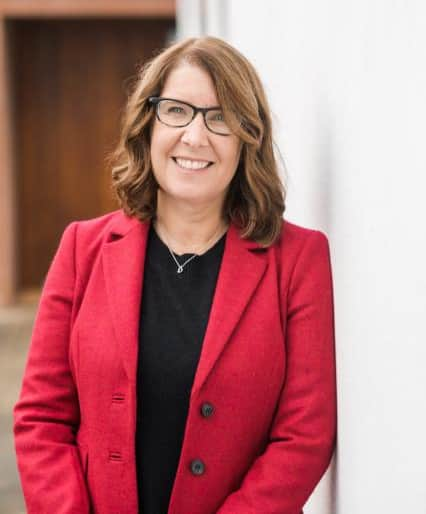
Work by Professor Lis Neubeck, Head of the Centre for Cardiovascular Health and Professor of Cardiovascular Nursing at Edinburgh Napier University, is helping more and more women to access the care that they need. She is building a national understanding of how women are affected by heart attacks, as they often struggle to get cardiovascular issues recognised.
“There are gaps in women’s cardiovascular health that are being addressed in some ways but not in all the ways they could be, and that is where we need more research,” she explains.
A former cardiac rehab nurse, Lis’s research focuses on a particular type of heart attack known as SCAD which stands for spontaneous coronary artery dissection. 9 in 10 people with SCAD are women, so she has worked with rehab teams across Scotland to support improvements in rehab services, informed by research carried out with patients who have suffered SCAD.
Lis first met two women who had had SCADs six years ago, and that inspired her journey to ensure women with SCAD are better recognised and have better access to treatment. It is estimated that 50 to 60 women a year suffer a SCAD in Scotland. But to see a SCAD specialist, women in Scotland had to travel to Leicester – a trip that could take more than a day for some
“Previously there had been a lot of misdiagnosis,” she explains. “I am passionate about developing better care: people don’t really know these female-specific conditions as well as they would wish.”
The women who are affected by SCAD tend to be younger, meaning they often felt out of place in male-dominated cardiac rehab programmes.
But the creation of a pilot SCAD clinic led by Dr Anne Scott and Dr Clare Murphy at Forth Valley Hospital in 2023 supported by seed funding from the Scottish Government has meant that Scottish women can now access the care they need closer to home. “My role there as a researcher is to see how we might be able to develop this service,” says Lis. “We think we have captured the majority of patients with SCAD in the country, all of whom rate the clinic really highly.
“We have now seen more than 150 patients over the course of the last three years from every health board in Scotland. Even though it is located in the Forth Valley, most women choose to come in person because they feel so isolated where they are.”
The new Universal Definition of Myocardial Infarction – the official rulebook used by doctors around the world to agree on what counts as a real heart attack – now includes SCAD as a primary heart attack, helping to strengthen diagnosis in women.
In 2024 Professor Neubeck received the prestigious Royal College of Nursing Scotland Outstanding Achievement Award, “but it is hearing it from patients that matters most.”
Research is still underway to better understand which medications work best, and Lis works to educate healthcare professionals about SCAD “so they know how to advise women to seek help”. As she works to build the knowledge around SCAD, “there is a sense of doing something worthwhile for people. If you understand the levers to pull, you can make a difference.”
It is hoped funding can be found to make the clinic permanent, and Lis is keen to hear more from the women of Scotland about what matters most in women’s heart health.
“We have succeeded in providing better care for women with SCAD in Scotland, so we’d love to continue to offer that. By understanding more about women's experiences, we can help prioritise what research should be done to improve care and outcomes for future generations of women,” she says. “We want to hear lots of voices from across Scotland to help us understand where there are still gaps.”
Take the survey to share your views at https://forms.cloud.microsoft/e/gqXcDmnJCj
Overcoming embarrassment with a universal colour chart
Hazel McPhillips was part of a project to tackle the messy, icky and often embarrassing issue of describing the exact colour of bodily fluids.

The ‘What Colour Is It?’ tool, which provides three colour palettes with between 13 to 15 shades each for identifying the colour of bodily fluids, made headlines in The Independent in January and interest has grown since then.
Lecturer and Advanced Nurse Practitioner Hazel developed the free online tool with Stephen Yorkstone. The idea came from discussing the need for a universal colour code and realising it didn’t exist. “It started as a fun conversation from a teaching session, then it was just a matter of months from the initial discussion to launching it live,” she says.
The demand for a universal, objective means of describing colour became clearer as they researched it: “We did a survey asking people to identify colours and describe them, and we got 40 to 50 different descriptions for one shade of green.”
Their identification tool uses the hex colour codes used in digital design all over the world to describe shades of colours that might be seen in that particular body fluid. This has helped the tool have international reach: it has been deployed in 23 countries, partly thanks to Hazel visiting medical conferences to spread the word and her international network of nursing contacts.
Hazel hopes to learn more about how it is working in practice, but early anecdotal feedback has been positive. “People are finding it is much easier to communicate and document,” she says. “It removes the need for subjectivity which can be shaped by culture or upbringing. We have kept it super-simple. People can point instead of describing, or you can use it remotely for communication and documentation.”
This means it is helping to break down barriers, particularly for people who may have English as a second language or communication difficulties, for example, or who find talking about pee and poo embarrassing.
Because it is online, both the healthcare professional and the patient can look at the same chart, she adds. “People working in remote medicine can ask over the phone – getting the patient to say ‘It is the third one down’ makes it a lot easier because we are doing a lot more medicine remotely now.
“It is only a small tool, but it has had a big impact.”
Come along and find out more
Come along to Edinburgh Napier University for yourself and learn about the research underway and how it is often integrated into what is taught.
The next undergraduate open day takes place on Saturday 24 October. Find out more and register for your spot on the website.
Or if you are interested in a postgraduate qualification, check out the details for the next open evening on Thursday, 19 November.