
Hibs' Block Seven ban is spot-on - even if they are making big sacrifice
Not-so-silent majority can fill void in huge home games
Subtle doesn’t work with some folk. It’s important to remember this, should you hear anyone accuse Hibs of being even the slightest bit heavy-handed in the latest sanctions handed down to a supporter group veering towards very dangerous territory. The Easter Road hierarchy have clearly decided that an important line has been crossed – and they will not allow continued incursions on their watch.
Amid all the complexities and political – with a very small p – considerations surrounding this big call from on high, it’s a simple enough issue at heart. One summed up by a single line in the statement issued by the club today, reading simply: “No-one should feel unsafe or uncomfortable when supporting Hibernian, and behaviour that puts others at risk is unacceptable.” Argue with that, if you will.
There will be a cost to the club in handing down a three-game ban to the Block Seven fan group. At the risk of adding fuel to their own sense of self-importance, the absence of this noisy and colourful gaggle of (mostly) young supporters will make a noticeable difference.
Tannadice flashpoint the trigger for suspension
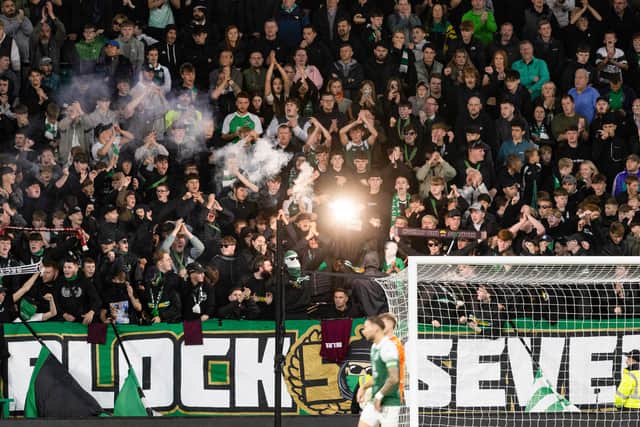

But the fact that Hibs have willingly sacrificed an important element of home advantage for two fixtures of enormous importance, not to mention a daunting night game in Paisley, tells you everything about the club’s determination to bring the self-styled ‘ultras’ to heel. If their patience hasn’t been exhausted entirely, they’ve now made it clear that any contribution made by Block Seven is only worth so much, when set against the trouble they attract.
A great many fans, weary of one particular group appointing themselves as spokespersons for an entire support base, will applaud the decision to implement a ban for the home games against Falkirk and Celtic, as well as the away match against St Mirren. A lot of punters have long since had enough.
Marink Reedijk home debut a big occasion
Well, now this not-entirely-silent majority have a chance to make a point. It’s up to those supporters, the Easter Road regulars relieved to see the back of the clack-clad lads behind the goal, to fill whatever void is created by their exile.
Because this coming Saturday is shaping up to be a huge occasion for a team in transition. Had they been able to behave themselves at Tannadice, Block Seven would undoubtedly have played an important, drum-banging, chant-leading, tifo-displaying role in a first home game for new manager Marink Reedijk.
The 35-year-old Dutchman has spoken more than once about the things that attracted him to Scottish football. The intensity that surrounds the sport, on and off the field, is a big draw for overseas coaches; wins and losses hit so much harder in this mad wee corner of the global game.
The absence of a section of supporters who often set the tone may actually encourage others to take responsibility for generating a different sort of atmosphere. It might even help Hibs, in some ways, should the team start the game slowly; if no particular group has a monopoly on hair-trigger impatience, the first boos and complaints often emanate from familiar territory.
Already hit with a one-game ban earlier in the season, and warned as to their future behaviour, the Block Seven boys can’t really complain about unfairness. If you can’t do the time, etc …
There is a wider issue to be addressed, of course, over the place of ultra groups within football. Nor should anyone imagine that sport is impervious to the same societal unrest that affects so many in their daily lives; the beautiful game often holds up an accurate mirror to ugly elements in the country at large.
Timing is also clearly a factor here. The three-game ban means Block Seven will be back just in time for the Premier Sports Cup semi-final against Hearts at Hampden.
There’s a risk-and-reward element to that fixture, on and off the field. A huge showpiece occasion for Scottish football, it’s an opportunity to promote the Edinburgh derby and its unique qualities. And the experience will definitely be enhanced by the sort of organised support that dedicated groups provide.
But not at any cost. Not if the reputation of the club is damaged by behaviour that goes beyond even the loosest match-day interpretation of Scots law. Not, most importantly of all, if it means other supporters feeling unsafe or intimidated.
The hope is that the blunt message delivered gets through, prompting a change of approach that means Hibs still benefit from a raw and unruly atmospheric boost on match day. Without anyone crossing the line into outright aggro.