
Former Police Scotland inspector calls for mental health professionals to support frontline officers
Ryan MacDonald, who retired from policing after developing complex PTSD, says officers should have direct access to specialist support after traumatic incidents
A former Police Scotland senior inspector who developed complex PTSD after decades of exposure to traumatic incidents has called for frontline officers to have direct access to mental health professionals.
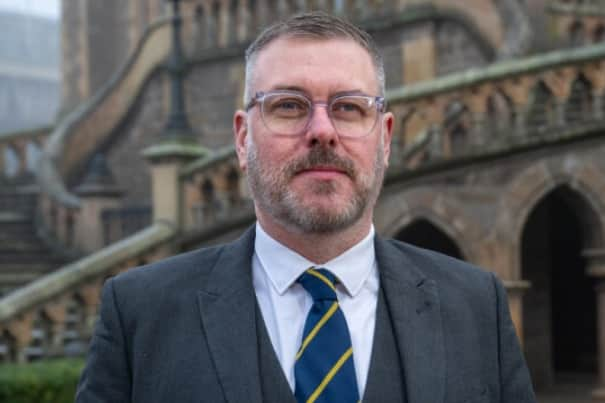

Ryan MacDonald spent more than three decades in uniform, including nine years with the Royal Air Force Police and 22 years in Scottish policing.
He rose to senior inspector and worked across counter-terrorism, intelligence, surveillance and major crime, while also serving as a critical incident commander.
His exposure to murders, suicides, child deaths and serious violence eventually led to complex PTSD and his medical retirement. He later wrote the bestselling memoir Blue Lights, Dark Mind and now speaks about trauma, resilience and mental health in high-pressure professions.
Speaking exclusively to SpeakOut, Ryan said the culture surrounding mental health in frontline services needed to change, with officers encouraged to speak about their experiences rather than simply being expected to be tough.
“Resilience is about knowing how incidents affect you and knowing how you can change and develop yourself to help that these incidents don't affect you in the future,” he said.
“Toughness might get you through there and then, as does adrenaline, but it's the times when you're driving home from work at 4:00 in the morning.
“For most of us, when you go into a non-police partner and the words are, ‘How is work?’, ‘Fine’ is always the answer.”
Ryan said officers rarely went home and described the traumatic incidents they had witnessed, such as the death of a child, a suicide or a shooting.
“We need to change a bit the culture in frontline services about how we get that resilience as part of the basics,” he said.
“When new people are joining, we need to let them understand that being resilient is about speaking up as well.”
Ryan also believes the stigma surrounding men's mental health is gradually changing between generations, although he said the culture of emergency services could make that process slower.
He has established his own support group, Standing Down, to help people leaving blue-light services cope with the loss of professional identity, authority and responsibility.
He said senior figures also had an important role to play by being more open about their own mental health.
“Senior leaders need to stand up and be open about their own mental health because then younger service people are going to say, ‘If the boss has had mental health challenges and can speak about it, then it's okay for me to speak about it,’” he said.
Ryan's strongest criticism is reserved for what he sees as a lack of immediate access to specialist mental health support for officers following traumatic incidents.
He said trauma risk management currently involves officers speaking to someone within their organisation, but argued that this did not necessarily provide the specialist clinical support required.
“To my knowledge, no police agency in the whole UK directly employs a mental health professional,” he said.
“The police and the blue light services deal with more trauma than anyone else, but they don't employ a mental health professional.
“That's what they need to do. They need to look at the policies, and policing particularly need to employ mental health nurses.”
Ryan recalled an incident when, as a supervisor, he was asked whether a custody nurse could support an officer who had just experienced a traumatic incident.
The nurse was willing to help, he said, but could not do so because of the agreement governing her role.
The officer was subsequently sent home and later went off sick, according to Ryan.
“When you've got a mental health professional who is able and willing to speak to someone in the same building, a matter of 40 metres away, that should be happening,” he said.
Ryan believes organisations should also make greater use of people with lived experience of trauma to help shape their approach to supporting staff.
His message to those working in frontline and high-pressure roles is that asking for help should not be seen as a weakness.
“I want people to think that they're not alone, that the uniform isn't a barrier,” he said.
“Senior roles and crisis roles aren't barriers to speaking about your mental health.”
“My message is really clear. I just want people to talk more about mental health. I want organisations to embrace it more, and I want people who suffer more to reach out.”
Ryan said people who were struggling should seek help rather than suffer in silence.
“I just want people to walk away going, ‘Do you know what? I can ask for help,’” he said.
The interview was conducted by Tabish Ali of the Motivational Speakers Agency