
Watch: Archaeologists uncover medieval roadway of Leith Walk during tramworks
Archaeologists working on the Trams to Newhaven project have uncovered evidence of the medieval roadway of Leith Walk.
Experts on the archaeological dig, the latest in a series of digs on the tram route between York Place and Newhaven, say the find is the oldest part of the famous thoroughfare, with the cobble-lined causeway believed to be between 600-900 years old.
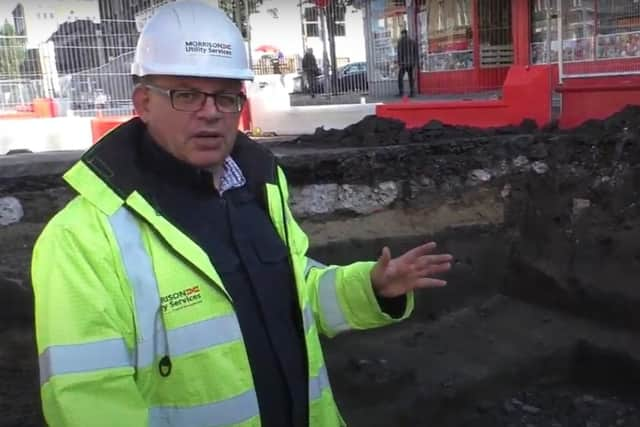

The medieval carriageway lies around a metre below the modern road and was built to improve trade links between Edinburgh and the port of Leith.
Pottery fragments and other artefacts have turned up during the dig which has enabled archaeologists to estimate how old the road is.
City Archaeologist John Lawson detailed the fascinating find in the latest Trams to Newhaven online vlog published on Thursday.
Archaeologists on site have found fragments of white gritty pottery, a type of earthenware that dates from the 12th century and John says experts are now looking at what could be an even earlier cobbled surface beneath the one just uncovered.
Cut away sections show all the historic layers of roadway below the present-day surface, with each layer representing a different period in time going back hundreds of years.
Speaking during Thursday’s vlog, John Lawson said: “It’s actually the oldest part of Leith Walk. What we believe we’ve found is the medieval road that links Leith with Edinburgh.
"We’ve actually got the best part of 500 years of road build up that’s approximately just over a metre down from the current road surface and it’s actually quite a rare survival.
"And it’s intriguing as we could have more than one medieval road surface which would be very interesting to find out.”
John says the neatness of the clay soil has caused problems for the archaeologists, with many of the ditches having flooded in recent weeks.
The historic roadway below Leith Walk follows the discovery of dozens of medieval burial pits and skeletons on Constitution Street dating from as early as the 14th century.
BBC film crew were present at Constitution Street two weeks ago to follow the work of the archaeologists for inclusion in the series Digging For Britain.