
Campaigners warn climate crisis is 'fuelling' blazes and threatening Edinburgh's green spaces after Arthur's Seat wildfires

The stark warning comes after the most recent wildfire on Salisbury Crags
A leading environmental charity has warned that the climate crisis is “fuelling extreme wildfires” and threatening some of Edinburgh’s most recognisable green spaces following a blaze near Arthur’s Seat earlier this week.
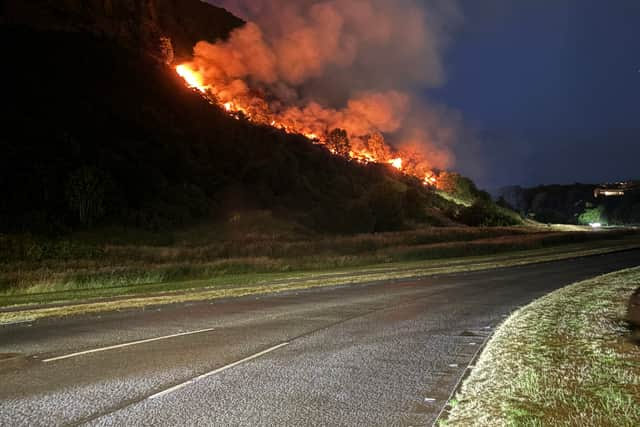
Fire crews worked throughout the night to battle the wildfire on Salisbury Crags after it first sparked on Sunday evening (July 19).
They departed the scene on Tuesday afternoon after almost two days of fighting the blaze, which has left a huge swathe of the gorse and greenland on the cliffside charred and reduced to ash.
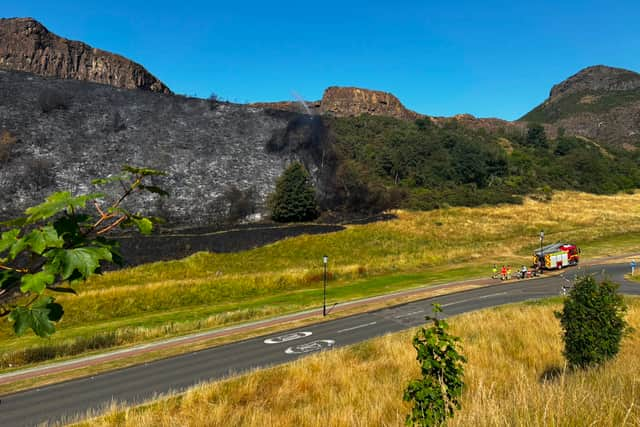

The Scottish Fire and Rescue Service (SFRS) has not yet confirmed a cause of the fire but Police Scotland said that it is not being treated as suspicious.
Arthur’s Seat has been the location of multiple wildfire incidents in recent years, with one in August 2025 and another just a few months ago in May 2026.
It comes as Edinburgh experiences an extremely dry and warm summer season so far, with temperatures this year regularly sitting above the July average peak of 19C.
Kim Pratt, senior campaigner at Friends of the Earth Scotland, has warned that warmer and drier summers could have devastating consequences for Edinburgh’s beloved parks and outdoor landmarks.
She said: “The climate emergency is fuelling extreme wildfires across green spaces in Edinburgh.
“They cause severe air pollution, kill wildlife and can destroy homes. They will continue to intensify across the city unless immediate action is taken.
“Communities facing wildfires need greater support from Edinburgh council to prevent and prepare for these fires which will become more frequent and more ferocious unless things change.
“We are so lucky to have amazing green spaces like Salisbury Crags and Arthur’s Seat right in the centre of Edinburgh, but to see these hubs of nature, wildlife and wellbeing burn two years in a row now is devastating.”
City of Edinburgh Council declared a climate emergency in 2019, as well as a nature emergency in 2023.
Ms Pratt added: “The solutions to tackle the climate emergency are clear: we must end our reliance on fossil fuels, and this requires the Government to stand up to companies that put profit before people and nature.
“The good news is that a better future is possible: more efficient homes, accessible public transport and renewable energy run for the public good are solutions which help everyone and limit climate breakdown too.”
Conservation charity The Cockburn Association has also spoken out about the impact on Edinburgh’s beloved landmarks from the recent fires.
The group said in a statement: “Edinburgh declared a climate emergency back in 2019, and fires like this one are a reminder of what that declaration was responding to: drier, hotter summers create the kind of gorse and grassland that catches fire easily, leaving parkland increasingly vulnerable to this kind of damage.
“What could perhaps be written off as a series of unfortunate one-offs is becoming a disturbing pattern, and one that lines up all too well with what the climate emergency warned us about all those years ago.
The Cockburn Association added: “Holyrood Park and the other green spaces that adorn our capital matter in ways that go well beyond scenery, and if the climate emergency is going to mean anything in practice, it probably has to start with recognising the immense strain our green spaces are under, for they are the very basis of our life, and rely on our collective stewardship for theirs.”
Cabinet Secretary for Climate Action and Rural Affairs Gillian Martin said: “Scotland experienced the largest wildfires in living memory during the 2025 season, reminding us that the harmful effects of climate change are already with us.
“Our approach to tackling climate change focuses on two priorities: adapting to the changes already locked in by historic emissions and continuing to drive down emissions to limit future harm.
"Scotland is already halfway to net zero, we are committed to reaching net-zero by 2045, and our Climate Change Plan takes action to reduce emissions and help people, communities and our natural environment prepare for a changing climate.”
City of Edinburgh Council have been approached for comment.