
East Lothian council leader defends neighbouring colleagues over misconduct finding
Council leader attacks watchdog decision as a 'affront to democracy'.
East Lothian Council’s leader has leapt to the defence of two Edinburgh councillors found guilty of breaching their code of conduct describing the decision as an ‘affront to democracy’.
City of Edinburgh Councillors Neil Ross and Marie-Clair Munro were censured by the Standards Commission earlier this year after it ruled they should have declared an interest and removed themselves from discussion around traffic plans which affected their homes.
And at a meeting of East Lothian’s Labour administration cabinet today, the council leader hit out at the decision saying it prevented elected members from speaking on behalf of their communities.
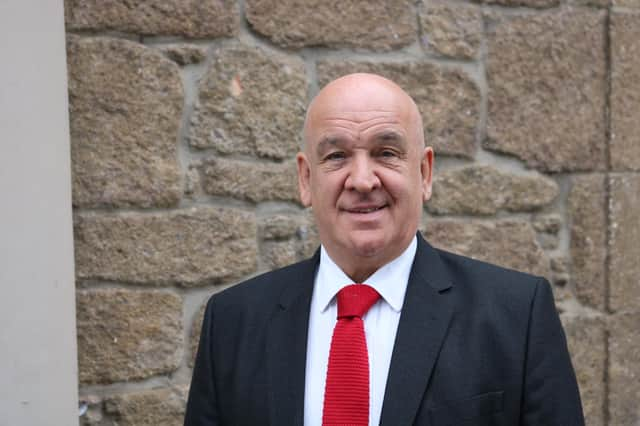

Councillor Norman Hampshire said: “This Standards Commission ruling is, to me, an affront to democracy.
“These councillors have been debarred from taking an interest in their own communities and I think something needs to be done to change this.”
His comments came as the council’s Provost John McMillan and deputy provost Andrew Forrest both had to declare an interest and leave the cabinet meeting before a report on proposed traffic regulation orders (TROs) near their homes were discussed.
Councillor McMillan told the meeting: “By virtue of living in one of the areas affected by the TROs and having spoken on behalf of residents and neighbours who have real concerns about road safety I will leave the chamber of that item.”
Councillor Andrew Forrest added: “In the same paper there is an item in close proximity to myself so I will be excusing myself from the chamber on that one as well.”
However Councillor Hampshire said he believed the actions of the Standards Commission had put councillors in an ‘impossible’ position when it came to representing their communities.
He said: “Councillors in any traffic regulation order near where they live, they have a duty and have been democratically elected to represent their constituents and should have the ability to make the case for their constituents.
“I know that several councils and COSLA have written to the Standards Commission on this basis because we need clarity on this.
“Councillors are being put in an impossible position and their constituents will not understand why they cannot take a decision on something that affects them after being elected to represent them.”
The Standards Commission considers the requirement for councillors to declare certain interests to be a fundamental requirement of the Councillors’ Code of Conduct, as it gives the public confidence that decisions are being made in the public interest, rather than in the personal interests of any councillor or their friends, family or associates.
A spokesperson for the Standards Commission said they agreed with Councillor Hampshire’s statement that councillors are elected to represent their communities and noted they are often asked to consider matters that could have implications for the areas in which they live.
However they said: “It is important to note this in itself would not be sufficient to create a declarable interest.
“In determining whether any connection a councillor may have to a matter amounts to an interest that requires to be declared, councillors must apply an objective test and ask whether a member of the public, with knowledge of the relevant facts, would reasonably regard their connection to the matter as being so significant that it would be considered likely to influence their discussion or decision-making.”
They added: “In respect of the findings concerning Cllrs Munro and Ross, the panel found the councillors’ properties were sufficiently close to the Quiet Route that any change to the way in which traffic was directed under it, and the consequent impacts were likely to affect where they lived.
“The panel therefore concluded that Cllrs Ross and Munro should have reached the view that a member of the public, with knowledge of this, would reasonably regard their connections as being so significant that they would be considered likely to influence their discussion or decision-making.”
The Cabinet was asked to approve a range of Traffic Regulation Orders to be progressed forward for introduction including reducing speeds in the communities of Kingston and Spott, introducing new cycle ways on footpaths around Musselburgh and introducing double yellow lines and waiting restrictions in Haddington.
Both councillors McMillan and Forrest left the chamber while the item was discussed and unanimously approved by cabinet. Full changes proposed can be viewed on the council website.