
Edinburgh council will be asked to lobby for powers to introduce congestion charging
Green councillor Chas Booth accuses Scottish Government of ‘betrayal’
Edinburgh council will be asked next week to agree to lobby for the Scottish Government to make available the powers to introduce congestion charging.
Green councillor Chas Booth has tabled a motion for Thursday’s full council meeting, “deeply regretting” Transport Secretary Stephen Flynn’s decision last month to halt work by civil servants on road user charging and calling for it to restart immediately.
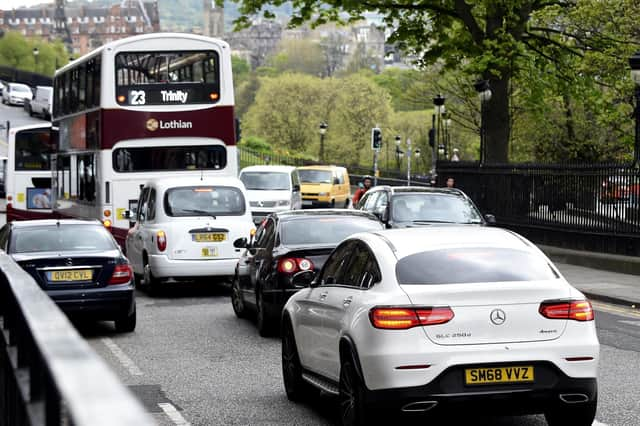

Although the Transport Act (Scotland) 2001 theoretically gives councils powers to bring in congestion charging, crucial secondary legislation to allow it to happen in practice is missing.
Cllr Booth’s motion calls for the council leader to write to the First Minister pressing for the work to resume. It also proposes she writes to local authority umbrella organisation Cosla, inviting it to support the call, and to Audit Scotland urging it to investigate whether Mr Flynn’s decision breaches the government’s commitments on climate and reduction of car use.
Cllr Booth said: “Stephen Flynn's U-turn is a massive betrayal by the Scottish Government. Ministers promised councils the full powers they need to cut car use, then abruptly and unanimously announced they were shelving the work.
“Edinburgh has a target to cut car use by 30 per cent by 2030. Without these powers we can’t meet it, and we can’t raise the millions we need to invest in public transport and safer streets either.”
He said London, Stockholm and other cities around the world had shown that road user charging could cut congestion and deliver cleaner air.
“And the money raised must be reinvested into better buses, safer routes for walking and cycling and other alternatives to the private car, all of which contribute to a just transition.
“The Scottish Government’s own research says Scotland can’t meet its climate targets without measures to reduce demand for transport, and Audit Scotland agrees. If the revenue is invested to benefit the people who rely most on public transport, it can make the city fairer as well as greener.”
Cllr Booth is hoping for SNP and Labour support for his motion. When he raised Mr Flynn’s decision at the full council meeting last month, Labour council leader Jane Meagher said that when the Scottish Government was talking about increased devolution of powers it was “absolutely absurd and contradictory” to deny councils one potential avenue for meeting its responsibilities.
Edinburgh held a referendum in 2005 on proposals for a congestion charging scheme for the city, which would have seen thousands of motorists paying a £2-a-day charge. But the plans were rejected by 74.4 per cent to 25.6 per cent.
The SNP in Edinburgh fought the last council elections in 2022 with a proposal for a congestion charge targeted at commuters driving into the city from surrounding areas.
And the council agreed in February this year to seek “preliminary discussions” with other councils on the idea, prompting Tory MSP Miles Briggs to claim a charge could be introduced by the back door. But transport convener Stephen Jenkinson said a charge was “not something being actively pursued at this time”.
Transport Scotland has previously said: “Given the ongoing pressures facing households, we will not be taking forward the review of the framework for local road user charging.”
It added that it was committed to reducing transport emissions and providing alternatives to the car, citing the ending of peak rail fares, free bus travel for 2.4 million people and the commitment to a nationwide £2 bus fare cap by the end of the parliament.