
Edinburgh pupil stars in film tackling some of world's biggest polluters over climate crisis
A 12-year-old climate activist from Edinburgh who helped grill one of the world’s top three plastic polluting corporations whilst calling for a child representative on the board of others has been awarded a grant to start her own eco business.
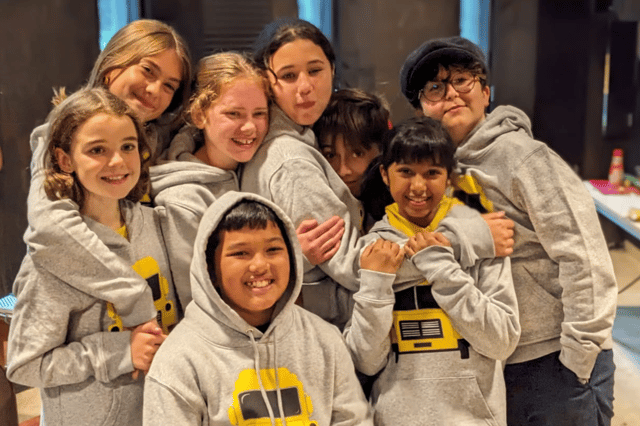
Clemence Currie, who goes to Portobello High School, is one of eight child stars of coming-of-age documentary, Future Council, directed by Australian filmmaker Damon Gameau, which follows them across Europe on an bio-fuelled school bus, taking to task leading global brands including Nestle, Decathlon and Faith in Nature over the climate crisis.
Coca Cola and Pepsi, the top two plastic polluters, refused to come to the table,
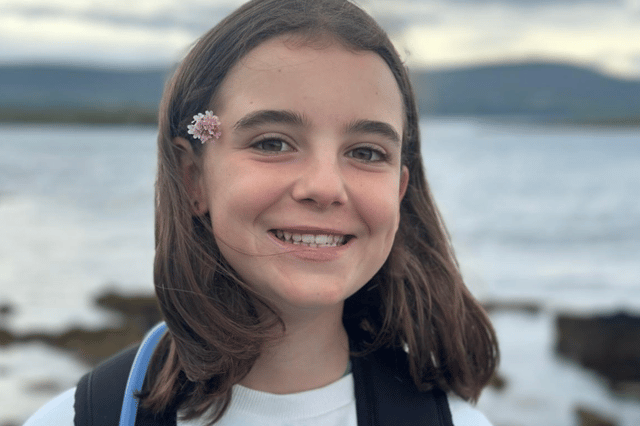

Motivated from an early age to do something about the climate and observing inaction, the plucky Edinburgh pupil explained: “When I was three I saw a video of a turtle with a straw up its nose and I thought, ‘what if that was my straw.’ She also penned a passionate letter to Innocent, the smoothie manufacturers, when younger asking them to use paper straws - “and it happened.”
CC, as she is also known, was assigned an area to research for the film and chose plastic pollution. She was stunned to learn that Nestle produced 13 million Kit Kats a day and 38 million coffee pods and asked Nestle why paper packaging was not an option.
She admitted to being “intimidated “ meeting Rob Cameron, global head of public affairs for Nestle - which churns out globally distributed plastic wrapped products as the biggest food manufacturer in the world - at the company’s Swiss headquarters.
He justified the continued use of plastics for certain products to the children claiming the chocolate bars lose shelf-life in some parts of the world without it. He said biodegradable plastics couldn’t always protect against that but pledged to take their concerns seriously.
CC, who devised questions for the executives with her mum, said companies should “be thinking about the toll they are taking on our environment. They just don’t know what they are doing.”
And she encouraged kids to join the wider climate movement: “I encourage people to write to CEOs. These people have a lot of power and I was definitely nervous speaking to them. It was not a child thing to do … it has given me more confidence though but not as much confidence for the future.”
Another of the children, Skye Neville from Wales, didn’t hold back in the documentary discussion of the 5 billion Kit Kats Nestle produced annually: “You’re not a powerful leader, you’re a disgrace,” she told the Nestle executive.
However, they were heartened to learn plastic lids for Smarties had been phased out by the company.
The children also quizzed Steven van Rijswijk, CEO of one of the world’s largest banks, ING, urging him to be greener and encourage clients to clean up their act.
CC asked him: “What would you prefer, a greener future or a future that still has fossil fuels and bad gas?” And why he kept giving money to fossil fuels and plastics.
‘It is so scary what is happening and horrible that humans know about it but blame others,” she added. “It impacts everything.”
Van Rijswijk said his bank was committed to green endeavours despite involvement in fossil fuels. He added it was actively looking at ways to encourage these companies to be cleaner in their processes.
After completing the documentary project , CC and her international pals were called with Gameau to make a short film to present to the United Nations in Australia.
Gameau, a crusading filmmaker, is known for the award-winning That Sugar Film, highlighting hidden ingredients in “health foods.”
He doesn’t believe kids should be compromising their childhoods to make political change. But he admitted some of these children were more “switched-on” than adults and deserved a voice beyond street protest.
He said: “I think we will look back and think how extraordinary these students are, taking to the streets. ” But he said he wanted other ways to let them express themselves, “because many of them know far more than most adults when it comes to sustainability.
“Their voices have never been more important.”
He was delighted that Nestle agreed to speak: “Nestle saying yes was a big deal, they’d never done anything like this before, but once you get companies like Nestle or ING it helps to unlock others.
“This next generation …will be the consumers of the future so they do have to be seen in a meaningful way.”
The overall mission of the documentary he said was to better understand the planet’s predicament and explore solutions and take the conversation into boardrooms of influential companies.
Faith in Nature also met the children and explained how nature had become a director of the board. The children were told child representatives would be welcomed as valuable advisors in the future.
CC was plucked from auditions out of 1000 global candidates. The children have now established an international child led Future Council to examine ways to ensure a brighter future for themselves and the planet they will inherit.
They have also been given money to set up her own eco businesses by a wealthy New York based philanthropist who saw the film.
Recently, Greta Thunberg, the child activist credited with making governments across the globe sit up and take global warming seriously, set off to Gaza with the biggest flotilla of ships since the second world war.
In 2021 Thunberg told the Youth4Climate Summit in Milan: “We can no longer let the people in power decide what is politically possible. We can no longer let the people in power decide what hope is. Hope is not passive. Hope is not blah, blah, blah. Hope is telling the truth. Hope is taking action. And hope always comes from the people.”
Future Council will debut in Scotland at the 3rd Montrose Land and Sea Festival, the nation’s first climate themed festival on Friday, which runs until September 14.