
Edinburgh roads: Fall in harmful emissions 'proves LEZ is doing its job' says transport convener
Improvement in air quality allows official designation to be lifted at former hotspots
Edinburgh’s Low Emission Zone has “significantly improved” air quality across the city, council chiefs have claimed.
Total traffic-related emissions of nitrogen oxides and airborne particulates have fallen more than predicted, according to a report to the transport and environment committee. Carbon dioxide emissions are also substantially down.


And the figures from the Scottish Environment Protection Agency (Sepa) show the effect is not just within the zone - one square mile in the city centre - but across the Capital as a whole.
The report says nitrogen oxides emissions were down 75 per cent inside the LEZ since 2019 and 66 per cent outside. Particulate emissions had reduced by around 79 per cent inside the LEZ and 71 per cent outside. And CO₂ emissions inside and outside the LEZ had fallen by 30 per cent.
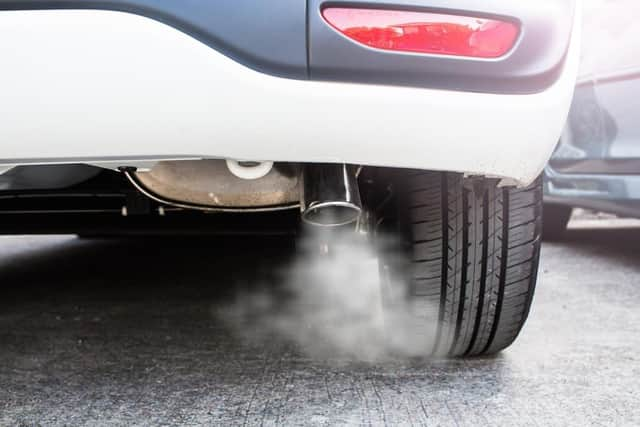
The council report says: “These results are very encouraging and suggest that the introduction of the LEZ, potentially alongside other changes to the road network during the period, has significantly improved air quality, not just within the LEZ but also in the rest of the city.”
Transport and environment convener Stephen Jenkinson hailed the figures as evidence of success.
He said: “On all those measures we’ve seen a significant reduction and that’s a really positive story to tell and it proves the LEZ is doing its job.
“I don’t hear many grumbles and groans about the LEZ, which tends to suggest it's working really well.”
He said as the father of a child who suffers from chronic asthma he paid close attention to air quality figures and was aware of the “huge health benefits” that cleaner air brought.
“I know not just my own daughter, but lots of other people’s children struggle with asthma, one of the triggers being particulate emissions.”
Market research with residents about the LEZ, due to be published in the coming months, shows increased levels of support since it became fully operational in June 2024, and a decrease in opposition, with 67 per cent in favour of the LEZ, and 11 per cent opposed.
Cllr Jenkinson said evaluation was continuing and he held quarterly meetings with the Scottish Government to talk about Edinburgh’s LEZ and learn lessons from the other Scottish LEZs in Glasgow, Dundee and Aberdeen. “It seems to be a fairy positive story across the piece,” he said.
A separate report shows traffic volumes in the LEZ and surrounding streets are also down. Car numbers within the LEZ are down by 19 per cent and all motor vehicles by 23 per cent, while in the surrounding areas car traffic is down by 18 per cent and overall motor vehicles by 20 per cent.
The transport and environment committee on Thursday will also hear that improving air quality means three out of five areas previously identified as pollution hotspots no longer need to be officially-designated air quality management areas (AQMAs).
Edinburgh currently has four AQMAs declared for breaches of the nitrogen dioxide objectives – Central, St John’s Road, Great Junction Street and Glasgow Road at Newbridge - and one AQMA declared for breaching fine particles standards in the Salamander Street area.
But Sepa has now accepted a proposal to revoke the Great Junction Street AQMA and the council will move to revoke the Glasgow Road and St John’s Road AQMAs during 2026/27, after objectives there were met for six and seven years respectively.
The council says analysis of the impact of the LEZ will help determine the future of the Central AQMA.
But the Salamander Street AQMA will remain in force after breaches of the standard on fine particulates at the Tower Street monitoring station. The objective is for the set level of particulates not to be exceeded more than seven times a year, but it was exceeded 11 times. The council says this was due to ongoing demolition, groundworks and construction from development. A new monitoring site has been installed on Melrose Drive to improve monitoring in the area.