
Edinburgh’s segregated cycle lanes and bike hire scheme boost cycling, MSPs told
Scottish Parliament transport committee takes evidence on cycling
Segregated cycle lanes and the Capital's bike hire scheme are increasing cycling in Edinburgh, the Scottish Parliament's transport committee has been told.
Spokes, the Lothian cycle campaign, cited figures from charity Cycling Scotland which showed that in May this year, for the first time, there were more bikes than cars on Leith Walk during the morning rush hour and that York Place had recorded its highest level of cycling yet - 4.7 per cent of all journeys by bike, up from 2.1 per cent in May 2021.
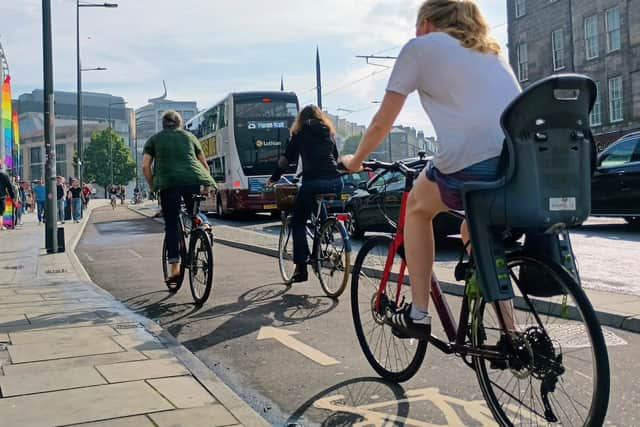

In a written submission to the committee, Spokes said: "Regular Spokes bi-annual traffic counts since 2021 at on-road locations without bike lanes also suggest rising bike use, but less substantial than on roads with segregated lanes."
And on the cycle hire scheme, it said: "There is convincing evidence of a major rise in bike trips thanks to the Voi scheme in Edinburgh. Anecdotally we know that some Voi trips are by existing cyclists, but data suggests strongly that many additional trips are being generated.
"A Spokes traffic count on September 24, 2026 at four different locations in Princes Street and George Street, over two one-hour periods, found Voi bikes comprising a remarkable 25 per cent of all bikes.
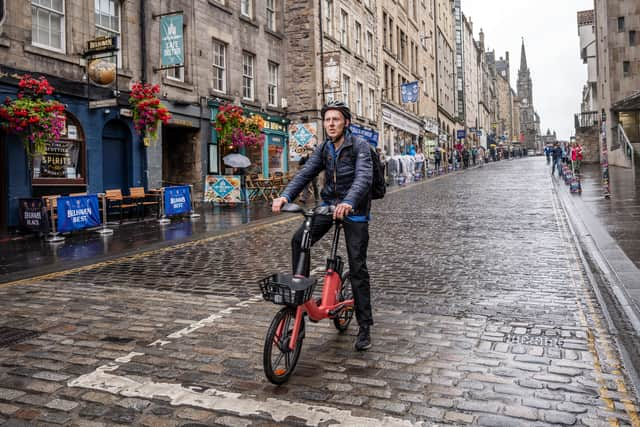
"The only significant complaint we are aware of around Voi bikes is that the semi-informal - but geo-fenced - parking locations are not always used tidily. Voi has recently painted lines around some troublesome locations, to clarify where bikes should be left, and anecdotally this seems to have helped considerably and could be expanded to more locations."
At a meeting of the committee on Wednesday, convener, Lib Dem MSP Willie Rennie, said £864m had been invested across Scotland in active travel and asked those giving evidence if they were satisfied with the growth in cycling. He said: "Overall the numbers haven't changed that much. There hasn't been a cultural change."
Fiona MacLeod, from the Walk, Wheel, Cycle Trust - previously Sustrans - said: “From a national perspective, the growth in cycling appears relatively flat. What we know is that in the areas where there has been significant investment we have seen significant increases as well.”
She said the trust had evaluated 27 active travel projects across the country and found a 78 per cent increase in overall use between two to five years later, including a 118 per cent increase in cycling with an additional 400,000 cycling trips and nearly 500,000 extra walking trips, up 60 per cent.
She said: “When you have that infrastructure, strong awareness of it, it's clear, it's well sign-posted, people know how to use it, it is used.”
Alex Robb, for Spokes, said segregated cycle lanes had also helped to reduce accidents. Pedestrian casualties on Leith Walk had fallen drastically from over 10 a year pre-2020 to around two a year post-2020.
He said: “Delivering these schemes doesn’t just make life safer for people walking and cycling, it's for all users on the road network.”
Linlithgow and Falkirk East SNP MSP Martyn Day asked about bus stop bypasses, better known as floating bus stops. Mr Robb said: “We have bus stop bypasses in Leith Street - we've seen about 2 million cyclists and 5 million bus stop passengers, we've had no recorded injuries or any collisions there, so it's really promising.”
But he added: “It is a very hot topic at the moment In the city. It's coming out as the most common topic in response to consultations. I think it's a key area where we need to see really high quality design so people feel safe using them.”
Mr Day said: “I suppose the risk is if it was a blind or partially-sighted user and they felt less safe, would they stop using it and therefore not show up in the stats?”
Ms MacLeod said: “It's about perception because what we can see from the evidence doesn't play out. People's perception of it is really critical to whether or not they'll use it. It has to feel it's a space everyone can benefit from, so we do need to work with disabled and partially sighted groups around these issues.”