
New Edinburgh city centre hotel plans submitted to transform Rose Street Theatre following previous refusal

New Edinburgh city centre plans have been submitted to transform a theatre into a new 43-room hotel, following a previous refusal by council planners.
Morningbridge Ltd lodged new plans on February 12 for the former theatre and church at 204 Rose Street, with requests for a change of use to a hotel and associated café/bar area in the roof as well as Listed Building Consent for internal refurbishment to make the required changes.
The Grade-B listed building, built in 1908, most recently used as Rose Theatre, has seen three change of use applications refused in the past, including for a pub and a performing arts centre.
Due to the perceived detrimental impacts on the spatial character and historic significance of the listed building, most notable from the sub-division of the sanctuary space, the original hotel plans were refused by the council in November.

Following this refusal, the applicant revised the proposals and additional pre-application meetings were held in January to discuss the revised proposals.
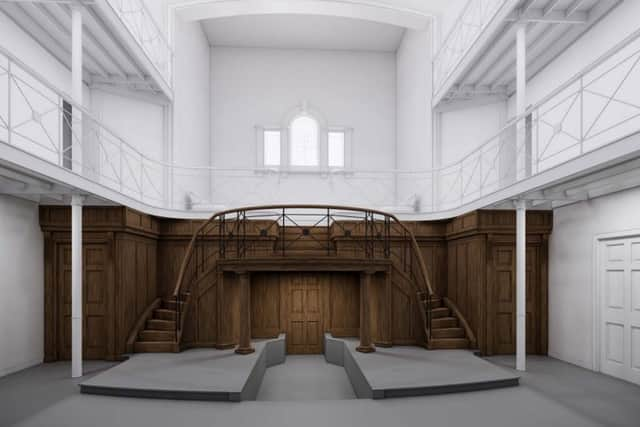
The revised proposals retain the sanctuary space, in part, in a more conservation-led approach to the re-use of the building as a hotel.
In the planning documents for this new application, Morningbridge Ltd said: “The spatial quality of the sanctuary space can now be more appreciated and is likely to correspond with the relevant planning policy and guidance.
“It is considered that the overall balance of the re-using this significant building in a sensitive manner would prevail. While the proposals would continue to involve a degree of new intervention and partial subdivision within the sanctuary space, sufficient open volume would be retained to allow a meaningful appreciation of the building’s ecclesiastical character.
“Central to the revised approach is the retention of the pulpit in-situ. The temporary removal of the pulpit during construction was considered to allow for the proposed floor levels in a previous iteration of the scheme.
“However, due to the pulpit’s complex construction, dismantling and reinstatement would pose a significant risk, therefore a simpler solution was found by lowering the floor level in room 1.01. The pulpit will remain in-situ with safeguards in place during construction.”
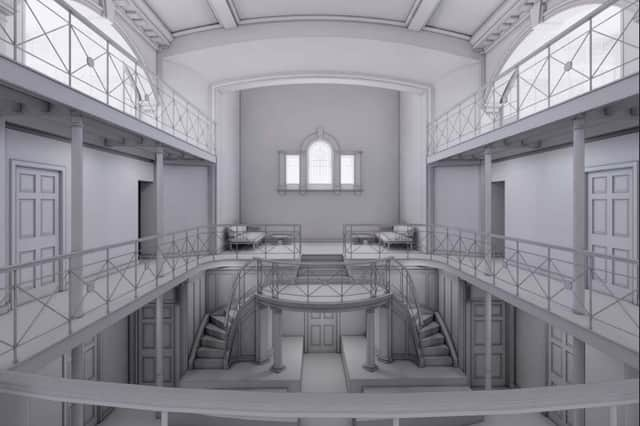
The proposed development includes the adaptation of the Listed Building for use as a hotel, incorporation of a dedicated breakout space, and a café / bar area within the roof.
The proposal will provide a total of 43 rooms for the seven-level hotel. This is a reduction of four rooms from the previous proposal of 47 rooms. The development proposes alterations to convert the building into a hotel, with accommodation from the basement to the upper levels.
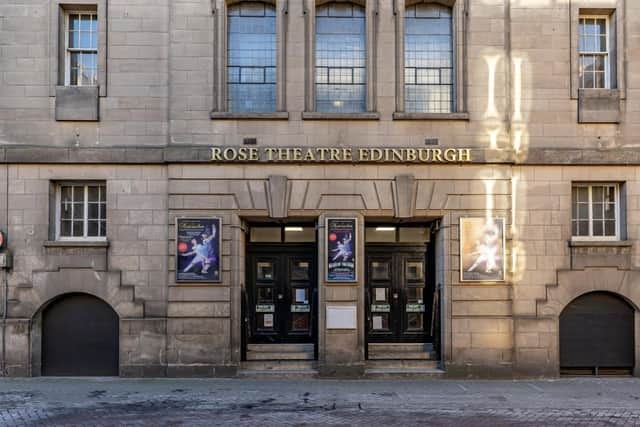
The applicant states that the exterior of the building will “remain predominantly unchanged”.
The applicant added: “Overall, the pre-application feedback was positive, confirming the principal re-use of the building for hotel development is acceptable, and the changes made have addressed previous concerns.
“Historic Environment Scotland were present at both additional meetings and expressed that they are now unlikely to object to the revised proposal.
“The proposed development will ensure the former Rose Street Theatre is brought back into sustainable and productive use as a hotel, thereby continuing to contribute to the cultural, social, and economic well-being of its surroundings.”
Revisions have also been made to the original hotel plans for levels 1–3. No changes are proposed to the original basement, ground floor, level 4, or rooftop plans.
Access to the building will be maintained at ground floor level from Rose Street. This access arrangement was utilised by the former use. Wheelchair access is gained from Rose Street Lane.

The Grade-B listed building built in 1908 was originally designed as a four-storey Edwardian Baroque Baptist chapel built of ashlar sandstone, with harled secondary elevations. It was secularised in 2012 when the congregation relocated to the former St George’s West Church.
The chapel thereafter found no settled use, and having latterly become the home of the Rose Theatre it never recovered from closure during the Covid lockdown, leaving the building empty and unused, until in 2024 when it was acquired by the present owners who hope to convert the building into a hotel.
The hotel plans for the former Rose Theatre will now be decided upon by the council’s planning department, with one private objection received already on the online planning portal.
For the latest public notices from your area, please visit: https://publicnoticeportal.uk/