
Calls for Edinburgh drug checking service to be 'urgently progressed' after rise in city deaths

A new drug checking service in the capital could enable users to access rapid testing to find out what substances their drugs contain
Plans for a new drug checking facility in Edinburgh must be “urgently progressed”, campaigners have said after new statistics revealed drug deaths in the capital rose by almost nine per cent last year.
Data published by the National Records of Scotland on Wednesday revealed there were 100 drug-related deaths in the city in 2025, compared to 92 in 2024.
Announcing the opening of a new drug checking service in Glasgow next month, Scottish Government Drugs Minister Maree Todd confirmed a similar facility is in the works for Edinburgh, and is currently preparing its licence application from the UK Home Office.
The new services, which have already been approved for Aberdeen and Dundee, will allow people to submit drugs for rapid testing and obtain quick results on what substances their drugs contain.
Ms Todd said the services were part of the Scottish Government’s response to an "increasingly toxic supply” of substances which have emerged in recent years, including synthetic opioids like nitazenes which can be up to several hundred times stronger than heroin.
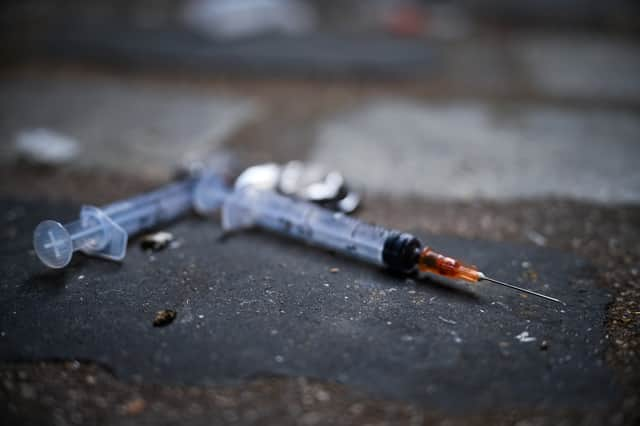

A public consultation by the Edinburgh Health and Social Care Partnership to open a safer drug consumption facility in Edinburgh’s Old Town closed in July, days after Edinburgh council formally agreed on its position to support the site.
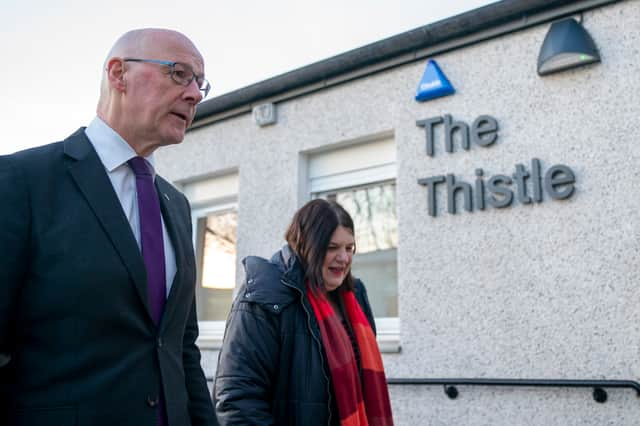
The Thistle in Glasgow, which was the first safer drug consumption facility in the UK, registered 575 users in its first year and managed 93 medical emergencies on site.
Substance abuse charities and services said the latest statistics underscored the need to progress both a drug checking service and a safer drug consumption facility in Edinburgh, as part of a wider network of prevention, harm reduction and treatment services available in the city.
Kirsten Horsburgh, chief executive of the Scottish Drugs Forum, said the city “must act quickly” to expand the practical support available for people at risk of harm in Edinburgh, saying “strong local leadership” was needed to “scale up” services.
She said: “That means making sure people can access harm reduction equipment, progressing plans for a safer drug consumption facility in the city, and urgently developing a drug checking service for Edinburgh.”
After Wednesday’s announcement, she said she hoped plans for a new drug checking service in Edinburgh would now be “progressed with urgency”.
“But we also need to be clear that no single intervention will end Scotland’s drug-related deaths crisis, and it would be a mistake to present safer drug consumption facilities or drug checking as a solution in isolation,” she said.
“It is too simplistic to say that 100 people in Edinburgh died because of an unpredictable drug supply, or because of drug use itself. Drug-related deaths are shaped by a much wider set of circumstances, including poverty, trauma, deprivation, housing insecurity and mental health inequality.”
Patricia Tracey, head of alcohol and other drugs at Turning Point Scotland, said: “Our Edinburgh service has seen increased use of cocaine and nitazenes, alongside changing patterns of drug use.
“These figures reinforce the need for sustained investment in evidence-based prevention, harm reduction and treatment services that can adapt to changing needs and provide flexible, wrap-around support.
“Turning Point Scotland welcomes progress towards a safer consumption facility in Edinburgh. While the feasibility study identified a clear need in the Old Town, it also recognised that drug-related harm exists across the city, with clusters of need in different areas.
“Safer consumption facilities should therefore be part of a wider network of accessible services, shaped by national and local decision-makers, the voluntary sector and people with lived and living experience, to ensure support is available wherever it is needed and help prevent further loss of life.”
Susan Webb, director of Public Health and Health Policy at NHS Lothian, said: “Changes in the global illegal drug trade have contributed to an increasingly toxic and unpredictable drug market, which continues to place people at greater risk of harm.
“The figures published today by National Records of Scotland show an increase in drug-related deaths in Lothian compared with last year, although the overall trend since 2023 has been downward.
“Representatives from a range of agencies review information from drug-related deaths and near-miss incidents to identify learning and strengthen services.
“NHS Lothian continues to work closely with local and national partners to improve surveillance, prevention and support systems, helping ensure people receive the right care at the right time.
“National benchmarking shows that Lothian's Alcohol and Drug Partnerships are performing well against the national Medication Assisted Treatment Standards, and we are grateful to staff and partners who continue to provide high-quality care and support in challenging circumstances.
“We would encourage anyone who uses substances, or who is concerned about someone who does, to remain vigilant and seek support and treatment as soon as possible.”