
I’m first in the queue when it comes to valuing good manners - Susan Dalgety
I am passionate about queues. In my book, forming an orderly line is a practical embodiment of democracy. Your place depends not on privilege or power but on your time of arrival or if the queue agrees, on your age or disability.
I was not surprised to learn that well-ordered queues first became the social norm during World War I when people had to wait in line for essentials like bread and coal.
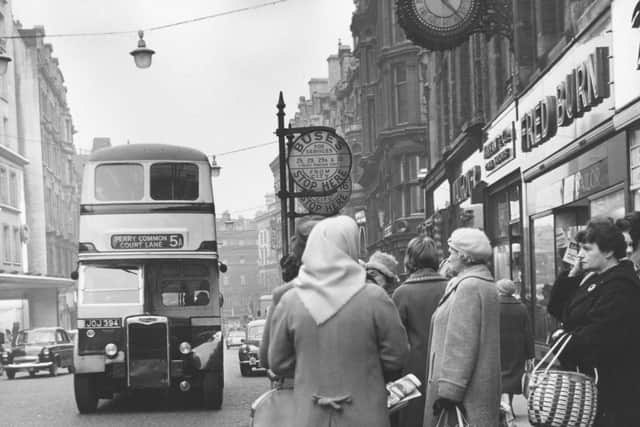

I have no patience for queue jumpers, happy to call them out whether at boarding gates, hotel bars and increasingly Edinburgh bus stops.
I thought I was simply becoming grumpier with age, but it seems my theory that people under 35 have no time for queues is correct. A recent survey shows that more than half of Gen Z believe that pushing in is acceptable behaviour.
And one in five of 18 to 29 year-olds say they do so regularly, which explains the chaos at bus stops, particularly on Princes Street.
I have lost count of the number of times recently where I have been queue-jumped by a young woman, usually wearing over-sized headphones which means my muttered complaints fall literally on deaf years.
As it is, city centre bus queues are crazy at this time of year with hordes of tourists jostling for position, eager to get on the next bus only to get off it immediately when the driver explains patiently that the number 44 does not go to Morningside.
I don’t mind visitors from America or Europe failing to adhere to our rigid queuing system. I have used enough public transport abroad to know that each country has its own rules or, as is in the case of some parts of Africa and southern Europe, none at all. But I do object to young Scots ignoring the basic etiquette of queuing.
Getting in line may be a Boomer or Gen X obsession, but as Gen X grow older they may well come to realise that there is a wider point to queuing. At the risk of sounding pompous, queuing really does represent the best of British.
It shows strangers respect and a spirit of co-operation all too often missing in society today.