
Investment in defence is investment in jobs - Ian Murray

As war rages in Ukraine and conflict in the Middle East, the world today is more perilous than at any time since the Cold War.
In such a world, uncertain and afraid, it is vital that we are prepared for the threats we face.

Here’s the stark reality: it is by no means impossible that we will find ourselves involved in a major conflict within the next decade. That’s the situation we are in and we have to confront it head on.
It’s in this context that the Labour government unveiled the Defence Investment Plan this week, outlining how nearly £300bn of defence funding will be spent over the next 4 years to strengthen our Armed Forces.
Despite multiplying threats from abroad, the previous Conservative government left our Armed Forces in a parlous state - overcommitted, underfunded and at their smallest since the Napoleonic wars.
To reverse this decline, last year the Labour government boosted defence spending to the highest level since the Cold War. This week’s announcement commits a further £15bn on top of that additional funding.
This means that defence spending will go from £54 billion a year under the previous
Conservative government to almost £80 billion a year by 2029, and that the UK's defence spending will increase to 2.7 per cent of GDP by 2030.
This will bring the proportion of GDP spent on defence to a higher level than at any time during the last thirty years by the end of this decade. It also puts the UK on track to meet NATO's defence spending target of 3.5 per cent of GDP by 2035, respecting our commitments to our allies.
The major spending uplift will also support jobs, creating nearly 60,000 extra direct and indirect UK defence industry jobs.
Our defence industries support well-paid jobs across the country, particularly here in Scotland, and so the Plan represents not just an investment into national security but also into these workforces and industries.
Importantly, it’s a question not just of how much we spend, but what we spend the money on. It’s no good spending more money if the capabilities you are investing in are fighting the wars of the past.
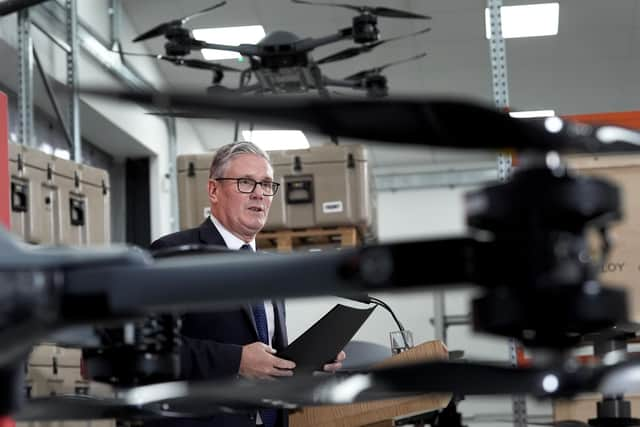
The Plan will see £5bn invested into drones and autonomous weapons, £1.6bn into defence innovation to power the adoption of AI, quantum and computing in the Armed Forces, and £2.5bn into the Defence Cyber and Electromagnetic Force.
This recognises that the nature of warfare is changing. As the war in Ukraine has so painfully demonstrated, quantity has a quality all of its own. Investment into drones and autonomous weapons will equip our Armed Forces to fight and win the battles of the future.
We cannot control developments abroad, but we can control our readiness to respond to them. The Defence Investment Plan will ensure that our Armed Forces are well-placed to respond to the threats we face, and keep us all safe. And it is a huge investment in the Scottish defence industry which means jobs and opportunities for thousands across Scotland.