
Jason’s death should hold mirror to society - Alex Cole-Hamilton
Summer is always a slow time for news, so when allegations of plagiarism first surfaced around Cambridge University’s youngest ever black professor, Jason Arday, it became something of a dripping roast for our nation’s media and commentariat.
For 22 days, the stories gathered steam. In the maelstrom of press attention, Jason became the lightning rod for a slew of hot takes, on the hot button issues of our time. His story was also recruited, predominantly by voices of the right, to make points about race, class, diversity and inclusion.
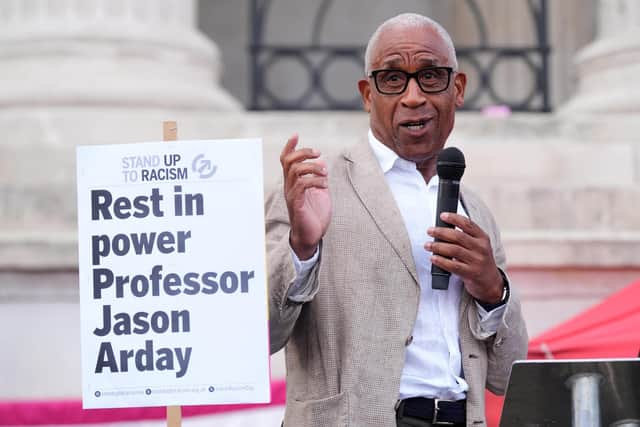

His shortcomings were talismanic for those who had always railed against the ‘Black Lives Matter' movement, for those who believe autism to be over-diagnosed or those who just relish the idea of seeing someone in the academic elite brought down.
But the moment that Jason Arday was found dead in his flat in London, the narrative shifted. While many still seek to suggest that he was the architect of his own downfall, others who had joined the pile-on are were forced to pause and to reflect. That’s welcome because his passing has held a mirror up to the worst extremes of public discourse and we need to have an honest conversation about that.
We aren’t dissimilar in age, and I’ve found the story of his last few days of life profoundly haunting.
All told, nearly 300 articles were written about Jason in the last three weeks of his life - that’s 10 a day. Meanwhile tens of thousands online speculated and rained down abuse. Even if he were guilty of every sin he has been accused of, imagine what that must have been like.
In the early days of the scandal, it will have become abundantly clear to Jason that he would not work at Cambridge again. And as the days dragged by and the coverage intensified, he’d likely have started to wonder if he could ever work anywhere again.
Anxiety about the potential loss of friends of colleagues. News crews waiting in the stairwell. Just going to the shops and facing the scornful stares of passers-by would have been an ordeal, but that might still beat trying to do some online shopping and being faced with the avalanche of push notifications from news platforms crowing about his downfall.
It was clear that the pressure he was under was immense and ultimately unbearable. His death was preventable.
Jason’s story is not just a tragedy, it is a reminder that no human being can withstand unlimited pressure, public scrutiny or condemnation. It’s also not an isolated incident. In 2020, Love Island presenter Caroline Flack took her own life after finding herself at the centre of a similar media firestorm of intrigue and scorn.
Their passing should haunt us all. We need to reflect as a society about how we report the collapse of an individual career. Yes, stories like this deserve to be told, the media have a right to report shortcomings and fraud. But perhaps before we comment or share a story we should also think about the safety of the human at the heart of stories like this.
But Jason’s story should also invite each of us to look inside ourselves, at our fascination in public downfall. At the links we click, the news we digest and the columns and airtime we create a demand for.