
Our attitude to immigration needs review - Christine Grahame
August half-way through, I have had a wee break visiting one of my sons and family in London.
In October I am now committed, despite my fear of flying, to travelling to Canada to see my other son and family. Flights are booked directly from Edinburgh to Halifax Nova Scotia. That’s a plus.

Like many Scots my children have not only flown the nest but Scotland too. That is not new as generations of Scots have populated Canada, New Zealand and Australia among many other airts. London too is brimful of Scots and other nationalities.
Indeed, travelling back from London recently, on the train of course, the elderly couple opposite told me they had started life in Glasgow, moved to New Zealand then to Australia and were back seeing the “old country”.
The wife in particular still had a touch of the Glaswegian accent, and banter, even after decades.
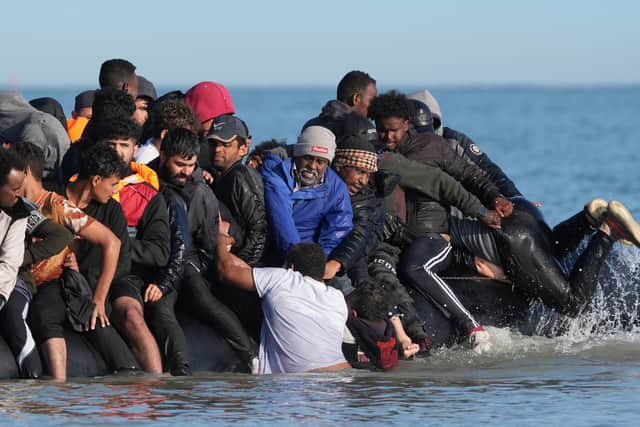
This is important as we watch immigrants fleeing war, poverty, persecution, being demonised. I watch unhappily protestors with banners proclaiming these immigrants should go home, portrayed as louts, scroungers, even dangerous criminals: men, women mostly young and children.
People who have handed over thousands to be jam-packed into flimsy inflatables, some without life jackets, to chance their luck and the waves for a better life. Whatever they find here it has to be better than what they left.
Similar criticisms were made of folk from the West Indies who came to the UK in the fifties to become then our bus drivers and the nurses so needed here. Added to that of course was the colour of their skin.
Today, worsened by Brexit, we have not enough nurses, care workers to support the NHS, fruit pickers and construction workers and to help the UK economy climb out of its decades’ long slump.
My car is mended by a man from Bosnia and my gas boiler was checked over by a chap from Turkey. Yes, we need work for indigenous UK folk, but they are not applying for the vacancies.
Part of it is our own fault. It has become the “thing” to attend university and have a degree. For some vocations it is necessary of course: medicine, scientific research, engineering and so on.
But we now have degrees in peripheral subjects which have diminished the skills of trades: plumbing, roofing, electricians and so on.
It is a nonsense, of course, and it is indeed better for the pockets of the individual and the UK if more young folk took up the tools. It is not second-class work.
The days when we could import these skills from EU countries and from immigration are long since passed, so these great gaps in the workforce underline that our attitude to immigration and separately the value and status of trades needs revisited.
While Scotland cannot change immigration policies, the UK government must devolve these to match our economic reality here and are not simply devised to combat rightwing Reform.
In Scotland, we can change that other reality: a degree is not the be all and end all. There are more than a few graduates who might rue the day they bypassed an apprenticeship.