
Plans for local government reform need proper scrutiny - Susan Dalgety
Two conflicting views can occasionally both be right at the same time. Edinburgh council leader Jane Meagher is absolutely right to say that the Scottish Government’s plans for the reform of local government are wholly inadequate.
A four-page consultation document with a 12-week timetable is barely enough time to properly consider a planning application for a block of student flats.
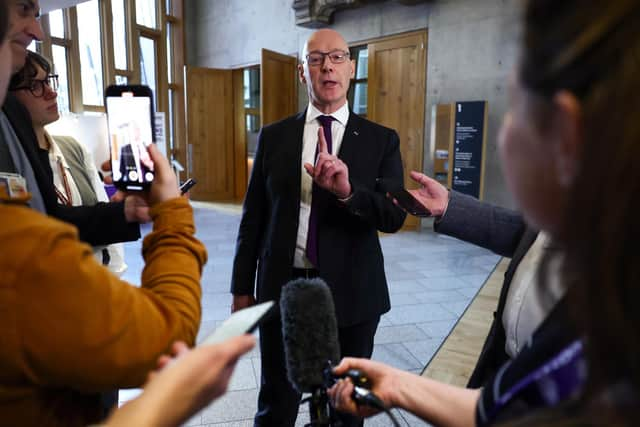

It is farcical for the biggest reform in a generation in how public services are delivered in local communities. Yet it seems the First Minister is so keen for change that he is willing to bulldoze Scotland’s 32 councils and their 1226 councillors into accepting change on this scale. To say nothing of the approximately 262,000 people employed in councils across the country.
The government says it wants a two-tier system to replace the current one, which came into being in 1995. It’s vision is for between six and ten regional authorities, similar to Greater Manchester city region which the Prime Minister led for nearly a decade, until he got an even bigger job running the country.
These super-councils would be in charge of, among other things, strategic planning, transport and economic development, while there would be up to 160 community authorities responsible for more local issues, such as licensing and parks.
Edinburgh’s councillors will debate the government’s “wholly inadequate” proposal at the council’s policy committee tomorrow, including a call by Cllr Neil Cuthbert for a referendum that will give residents direct say on the government’s plans for the Capital.
I have a lot of time for Cllr Cuthbert. He is a canny man as they say, but I think he is on a hiding to nothing with his referendum demand. The last thing John Swinney wants is for his plans to be subject to public opinion.
Successive SNP governments have made such a hash of their budgets that the current one is effectively broke. The First Minister needs to make massive savings across the public sector and rationalising local government is one way to cut costs. He is not interested in what the good folk of Edinburgh, Livingston or Haddington think, he just needs to make his books balance.
Jane Meagher is also correct when she says the government’s approach is “disrespectful”. I would go further. The consultation is a sham and I am willing to bet next month’s council tax that somewhere deep in St Andrew’s House there is already a blueprint for a network of city regions across Scotland, supported by beefed-up community councils.
But having said all that, Mr Swinney's idea deserves to be considered. I have suggested it myself in the past, but not to save money.
An Edinburgh City Region that covered East and West Lothian and Midlothian could see prosperity spread across the region, and not contained in Edinburgh city centre.
A strong city region would be better placed to negotiate with the Scottish and UK governments and it would be a very attractive location for inward investment.
But within this new structure, the ‘community’ authorities would need to be properly resourced, with far more powers than their namesake’s community councils. I have a horrible suspicion that Swinney’s local government revolution will end badly, for all concerned.