
Pragmatism is needed to tackle housing emergency in Scotland - Donald Anderson
Despite the declaration of housing emergencies by the Scottish Government and councils including Edinburgh, we are building significantly fewer homes than we were two decades ago.
The latest Scottish Government figures make grim reading. Construction started on just 15,543 new homes in the year to June 2026, compared with around 30,000 annually at the peak before the financial crisis. Housing completions fell by 11 per cent over the last year, with social housing completions falling by 25 per cent.
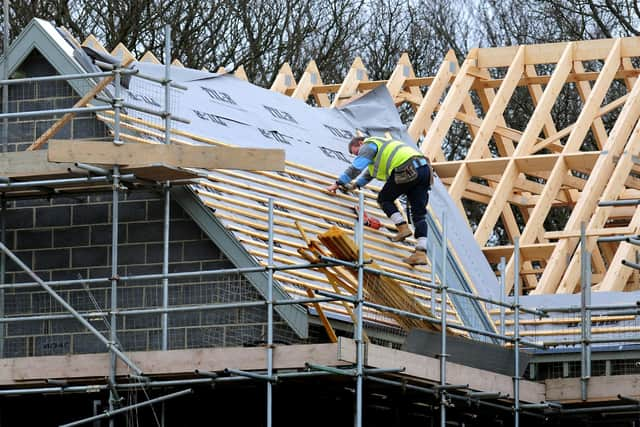

That should be particularly concerning in Edinburgh, where the city’s economic success and sustained population growth have generated considerable additional demand for housing.
There is no single explanation for the slowdown. Rather, a combination of circumstances and policy decisions has made Scotland a considerably more challenging place in which to build homes.
The prolonged uncertainty surrounding rent control proposals disrupted institutional investment in rented accommodation at precisely the time we needed to encourage it.
One particularly striking example was at Waverley Gate in Edinburgh, where Legal & General put its consented residential development site on the market the day after the Scottish Government announced its proposed rent control legislation. The site has subsequently been switched to student accommodation.
It is far from an isolated example. Numerous other proposed residential developments have been switched to student accommodation, with investors citing the uncertainty created by rent controls. Whilst moves to exempt build-to-rent developments are welcome, considerable damage has already been done.
The substantial increase in construction costs following Covid, compounded by higher borrowing costs, has also fundamentally changed the economics of development. Projects which were perfectly viable five or six years ago are no longer necessarily so.
We have also experienced an erosion of capacity within Scotland’s construction industry. Some long-established companies have gone out of business, while others, notably Sir Robert McAlpine, have taken strategic decisions to withdraw from the Scottish market.
Against that backdrop, we have continued to place additional requirements on new housing developments. Higher environmental standards, affordable housing contributions and infrastructure obligations are all individually well intentioned. However, when added together these all damage viability and unless a site gets developed, there are no developer contributions and more importantly, no new homes.
We could usefully learn lessons from Bristol, where a council official recently summed up the challenge rather neatly by observing that “Nobody can live in a planning consent”.
The success of our planning system should ultimately be measured not by the number of homes granted permission, but by the number built and occupied.
That requires a more pragmatic relationship between councils and developers, a greater willingness to understand the economics of individual developments and, where necessary, flexibility in the application of policies.
That is not an argument for abandoning good design, environmental standards or our ambitions for affordable housing. It’s about recognising that those ambitions can only be realised if housing development actually takes place.
Declaring a housing emergency is, frankly, the easy bit. Tackling one requires difficult decisions, a willingness to review existing policies and an understanding of the commercial realities of building homes.
Unless we demonstrate greater pragmatism and a collective determination to improve viability, our efforts to tackle the housing emergency will continue to stall. And it is those most in need of housing that will pay the price.