
World Car Free Day: Bogotá to Edinburgh - Corey Boyle
In 1974 a 5000-strong legion of protesting cyclists closed the Colombian capital's traffic-choked streets and reclaimed them for the people.
In 1976, the local government enshrined this virtuous act in law as the Ciclovía, a name now revered by urbanists worldwide.


Ciclovías now take place every Sunday and public holiday in Bogotá, with nearly 130 km of roads closed to cars. Each week, over 1.5 million people enjoy healthier, more active lifestyles.
Former Bogotá mayor Enrique Peñalosa stated: “A city can be friendly to people or it can be friendly to cars, but it can't be both”.
This phenomenon has spread throughout the world's car-dominated metropolises, with Mexico City, Jakarta and São Paulo among those launching weekly initiatives. It more than pays for itself: in Bogotá, every $1 spent returns up to $4.26 in health benefits alone.
The concept has found fertile ground, but not here. Those of a certain generation growing up in Scotland will fondly remember playing football on the streets, or the long-forgotten game of Kerby.Since 1962, Scotland's population has risen by just 7 per cent, but licensed vehicles have increased by almost 300 per cent. And they sit idle, hogging public space, for 96 per cent of their lifetime.
The streets are no longer shared. Since the Second World War, we have built and rebuilt our towns and cities around the presumption that everyone would have a car, leaving communities cut off and car-dependent.
Transport ranks as the heaviest financial drain for rural UK households, excluding mortgage payments, and the second-heaviest for urban ones. Buying and running a car makes up most of it, pushing 630,000 people, or 11.5 per cent of Scotland's population, into transport poverty.
Research led by Dr Patrick Miner at the University of Edinburgh puts the global toll of the car since its invention at 60 to 80 million deaths. Road traffic incidents remain the biggest killer of 5-29 year olds globally.
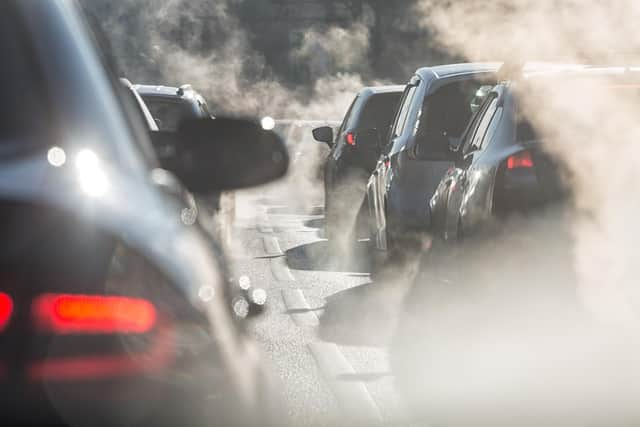
Across the UK, traffic fumes cause one in five cases of childhood asthma. Physical inactivity accounts for one in six deaths. Yet kids are driven to school more than ever before. Our car- dependent cities trap us in isolation, fuelling a loneliness epidemic with a mortality risk researchers compare to smoking 15 cigarettes a day. We built this. And it is killing us. But there is an alternative reality.
Each year on 22 September, cities close their streets to cars for World Car Free Day. The European Commission took it Europe-wide in 2000, reaching 70 million people. Today, thousands of towns and cities across more than 40 countries globally take part.
Brussels, long Europe's most congested capital, now proves the benefits of urban pedestrianisation through its annual car-free day. It creates Europe's largest car-free zone, closing almost all streets across the 162-square-kilometre region to private motor vehicles.
Nitrogen dioxide drops by 62 per cent against an average Sunday and 74 per cent against a weekday.
Noise pollution follows the same trend, with sound levels falling by 99 per cent. Instead, the streets are filled with dog walkers, cyclists, runners, markets, street parties and music. The bill: €810,000, covering communication, road closures and free public transport. Its clear success has led to calls for more.
Over one million people gain tangible health and social benefits for under one million euros.
And not every driver resents it. ”I drive everywhere I go, but I still think Car-Free Sunday is a good idea” one Brussels motorist told the Brussels Times.
TomTom's 2025 data ranks Edinburgh the UK's second most congested city, with motorists losing 127 hours a year, five full days, sitting in gridlock. Compounding commuters' misery, INRIX estimates those delays cost £177 million, or £702 per driver. Yet 38 per cent of Edinburgh households have no car at all, and still breathe the fumes.
This World Car Free Day will pass largely unmarked here. Yet in May 2019 Edinburgh became the first UK city to launch the global Open Streets programme, closing the Royal Mile and Victoria Street to traffic on the first Sunday of every month. The pandemic ended it.
This year's Summertime Streets closures gave us a taste of what the Old Town could be without cars. Still, they benefit the tourist influx in areas many residents otherwise avoid.
Revisiting the idea next year, on 22 September, with residents at the forefront, could bring the proven benefits to the areas they actually live in: Gorgie, Niddrie, Portobello. Our communities and civic spaces did not erode by coincidence after the car arrived. They were rebuilt around it. Handing them back, even for a day, is how a Capital starts to feel equal and healthy again.
The streets are commons. In 1974, Bogotá's legion took them back from the car. Edinburgh's citizens still can.