
Holyrood elections 2026: What do John Swinney and Keir Starmer have in common?
Election experts’ have analysed voters’ attitudes
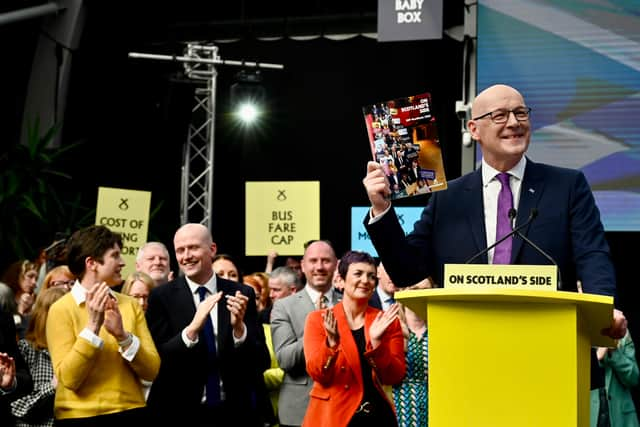
John Swinney would probably be horrified by the idea that there could be a parallel of any sort between him and Sir Keir Starmer.
But election experts are suggesting there is at least one similarity - not so much between the two men themselves, but in voters' attitudes to their parties at election time.

The sweeping 174-seat Commons majority which Sir Keir won for Labour at the general election in July 2024 has been branded a "loveless landslide" because it was based on securing just 33.7 per cent of the votes, the lowest vote share on record for a winning party.
Polls suggest John Swinney and the SNP are on course for a clear victory in the Holyrood elections on May 7, the party's fifth win in a row.
But having tracked public attitudes and voting intentions since soon after the last Holyrood elections in 2021, experts at the Scottish Election Study (SES) say the most remarkable thing is that the governing party has lost a third of its vote share and still seems on track to win comfortably.
Fraser McMillan, lecturer in Scottish electoral politics at Edinburgh University and one of the SES team, says: "The risk for the SNP is that this election echoes Labour’s 'loveless landslide'."
The number of people believing the Scottish Government is doing a good job halved from 40 per cent soon after the last election to around 20 per cent by 2024, though it has improved slightly since Mr Swinney became First Minister.
Governments which have been in power for a long time usually see their popularity decline and end up being kicked out.
But Dr McMillan say the SNP looks like escaping that fate for two main reasons.
"Firstly, most pro-independence Scots will still vote for the SNP – they may not love the nationalists as they once did, but they trust the SNP to stand up for Scotland’s interests.
"Secondly, the emergence of Reform UK at the same time as cross-border contamination tanking Scottish Labour (and the Conservatives’) prospects means the SNP’s opponents are even more fragmented than before."