
Fuel price cuts: The price you will pay at the pumps in Edinburgh today after 5p price cut
News that fuel prices will be cut for the next year offers a crumb of comfort to motorists in Edinburgh.
Chancellor Rishi Sunak announced a temporary five pence per litre cut on Wednesday (March 23) and it came into force last night at 6pm. This is only the second time in 20 years fuel duty has been cut.
The price slash will remain in place until March next year, which is perhaps the saving grace of the news as the price of diesel has rocketed around 20p a litre in just 10 days.
The cheapest you will pay for petrol is £156.9p at Tesco Extra at Corstorphine and the most expensive is £169.9p at the BP garage on Ratcliffe Terrace.
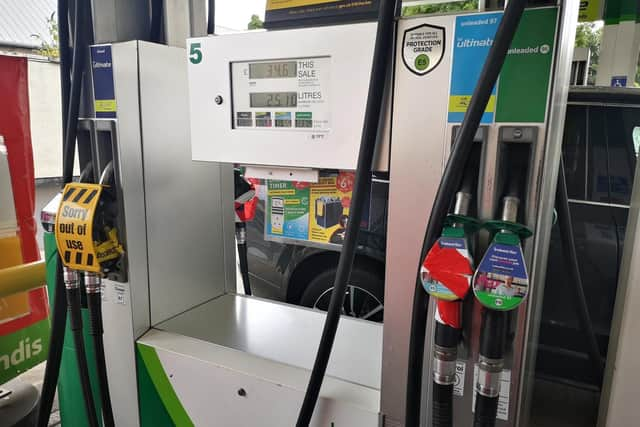

The joint-second cheapest is Morrisons petrol stations at Granton and The Gyle, coming in at £157.7p,
Sunak’s decision to cut fuel duty was met with caution by motoring groups and criticised by public transport and environmental campaigners.
AA president Edmund King said: “The AA welcomes the cut in fuel duty. However, we are concerned that the benefit will be lost unless retailers pass it on and reflect a fair price at the pumps.
“Average pump prices yesterday hit new records despite the fall in wholesale costs.
“The Chancellor has ridden to the rescue of UK families and businesses who use their vehicles, not for pleasure, but to function in their daily lives.
“Since the start of the year, the 20p-a-litre surge in pump prices has been the shock that rocked the finances of families, and particularly young drivers, pensioners and lower-income workers who need to commute each day.”
Steve Gooding, director of motoring research charity the RAC Foundation, said the duty cut “doesn’t go very far to help low-wage key workers who rely on a car to get to their place of employment, often at times which are antisocial and when other travel options are non-existent”.
Friends of the Earth’s head of policy Mike Childs said the reduction in fuel duty will “largely benefit wealthier households who tend to have bigger vehicles and drive more”.
He continued: “The priority should have been to follow the lead of New Zealand by reducing the price of public transport and providing a more affordable alternative to driving.”