

How much has Edinburgh’s population increased? How does our life expectancy compare with other places? Is tourism recovering? How do we rate on recycling? The answers to these and many other questions are contained in the latest edition of Edinburgh by Numbers.
The city council publication, now in its 16th year, provides a fascinating insight into the ever-changing city. The statistical overview looks at the Capital’s population, its economy and its environment, as well as how people live and work and those who are visiting the city. It also compares Edinburgh against the other big cities in Scotland – Glasgow, Aberdeen and Dundee – and the top eight largest UK cities outside London – Manchester, Birmingham, Sheffield, Bristol, Glasgow, Leeds, Liverpool and Bradford.
City council leader Cammy Day said Edinburgh was often cited as “one of the most incredible places to live” and he highlighted evidence of people living well and living longer compared to similar cities. But he said there was also a flip side. “Our population has risen faster over the last decade than other cities, leading to an aging population, increased demand for homes and some of the most expensive rents in Europe. Wages are higher than average, but so too are costs and many residents continue to struggle with the cost of living crisis.
“For the council, government and all city partners, it’s important that we act on the findings of Edinburgh by Numbers and address these challenges. Future generations should be able to reap the benefits of ‘the best city in the world’ too. This involves planning for the future in line with our 2050 City Vision and projects like the tram extension, Granton’s regeneration and more affordable housebuilding will be key to a more sustainable city, alongside our ambitious net zero carbon by 2030 goal.”
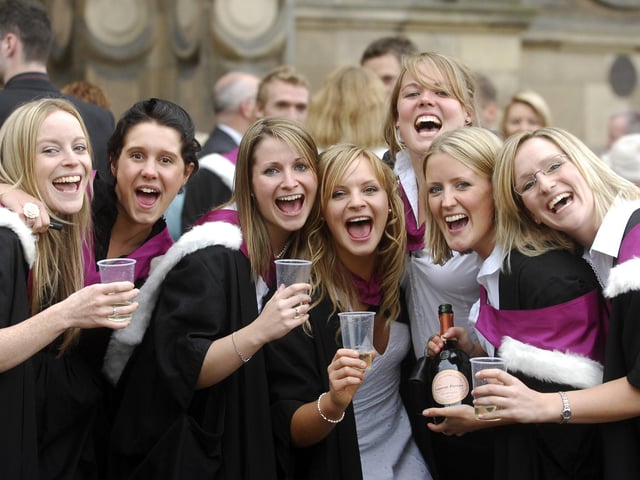
5. Students now outnumber school pupils
There are now more students in Edinburgh than school pupils. In 2021/22 the number of students enrolled in an Edinburgh university totalled 69,815, compared with the pupil population of the city's schools, which was 61,345. There were also 29,342 students at college in the city. Edinburgh has one of the highest proportions of higher education students in the UK at 136 per 1,000 population. The only places with a higher figure are Manchester (148.2) and Bristol (136.3). And in 2021, 69.7 per cent of the Edinburgh workforce in employment was educated to degree level or above. Photo: Jane Barlow
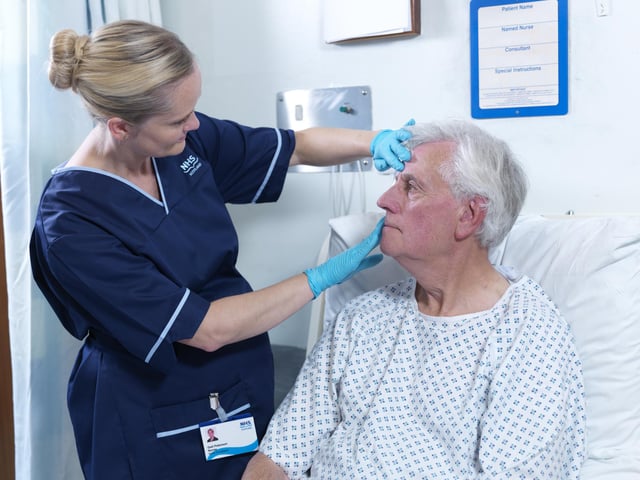
6. Health sector is the biggest employer
More than 15 per cent of all jobs in Edinburgh are in the health sector, with 55,000 people in the city employed in the health industry in 2021. Nearly one in ten people employed in the Capital worked in finance and insurance - twice as much as the average across other major UK cities. And compared to other UK cities, Edinburgh also has more people working in accommodation and food services, information and communication and arts, entertainment, recreation and other services - but fewer in construction and manufacturing. Photo: NHS photo library

7. Visitor attractions are bouncing back
Edinburgh's visitor attractions, including the zoo, are bouncing back from the effects of the pandemic. Figures for 2021 show a significant recovery in the number of visitors compared with 2020. The top attraction in the Capital was the National Museum of Scotland in Chambers Street, where there were 661,000 visitors - up 48.4 per cent on 2020; next was the Royal Botanic Garden, which welcomed 648,000 visitors, a 43.1 per cent increase; and the zoo recorded 632,000 people, a massive 116 per cent up on the previous year. COVID 19, CORONA VIRUS - Edinburgh Zoo re-opens its doors today after being closed for over 3 months due to COVID 19 Photo: Lisa Ferguson
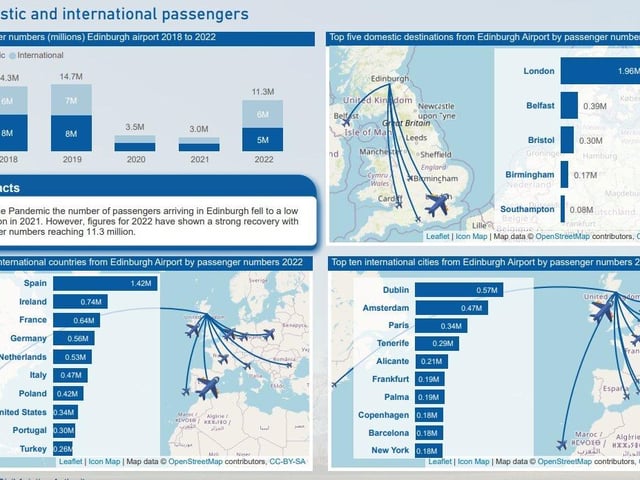
8. Airport recovery ready for take off
The number of passengers at Edinburgh airport fell in 2020 due to the pandemic and the trend continued in 2021, but a recovery is expected to show in the 2022 figures. The vast majority of passengers taking domestic flights from Edinburgh are flying to London - 900,000 in 2021. Internationally, Dublin was the favourite destination with 158,000 passengers flying there in 2021. But Spain was the top country for international flights with 296,000 taking flights to various Spanish airports. Photo: Civil Aviation Authority