
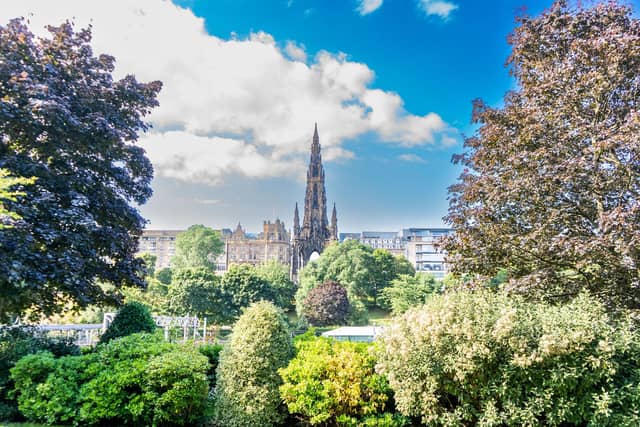

How much has Edinburgh’s population increased? How does our life expectancy compare with other places? Is tourism recovering? How do we rate on recycling? The answers to these and many other questions are contained in the latest edition of Edinburgh by Numbers.
The city council publication, now in its 16th year, provides a fascinating insight into the ever-changing city. The statistical overview looks at the Capital’s population, its economy and its environment, as well as how people live and work and those who are visiting the city. It also compares Edinburgh against the other big cities in Scotland – Glasgow, Aberdeen and Dundee – and the top eight largest UK cities outside London – Manchester, Birmingham, Sheffield, Bristol, Glasgow, Leeds, Liverpool and Bradford.
City council leader Cammy Day said Edinburgh was often cited as “one of the most incredible places to live” and he highlighted evidence of people living well and living longer compared to similar cities. But he said there was also a flip side. “Our population has risen faster over the last decade than other cities, leading to an aging population, increased demand for homes and some of the most expensive rents in Europe. Wages are higher than average, but so too are costs and many residents continue to struggle with the cost of living crisis.
“For the council, government and all city partners, it’s important that we act on the findings of Edinburgh by Numbers and address these challenges. Future generations should be able to reap the benefits of ‘the best city in the world’ too. This involves planning for the future in line with our 2050 City Vision and projects like the tram extension, Granton’s regeneration and more affordable housebuilding will be key to a more sustainable city, alongside our ambitious net zero carbon by 2030 goal.”
9. Unemployment has fallen
Edinburgh’s unemployment rate, at 2.9 per cent, is now under half the rate for 2014, when it was 7 per cent. By 2020 it had dropped to a low of 2.8 per cent, followed by an increase in 2021 to 4.4 per cent, after which it fell back to 2.9 per cent in 2022. Meanwhile, median hourly pay has risen to £16.28 which is the highest of the major UK cities excluding London. Photo: Unknown
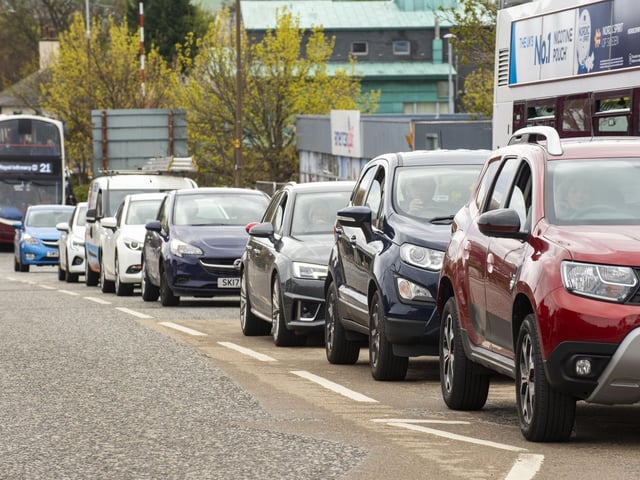
10. Congestion adds 10 minutes to commute
Traffic congestion in the Capital adds nine minutes to an average 10k commute in the morning rush hour and 10 minutes during the evening peak. The delays faced by Edinburgh motorists compare with worse hold-ups in Bristol, Manchester and London. Commuters in the English capital face daily delays averaging 19 minutes during the evening rush hour. But Birmingham, Glasgow and Leeds-Bradford all have shorter delays for motorists. Photo: Lisa Ferguson
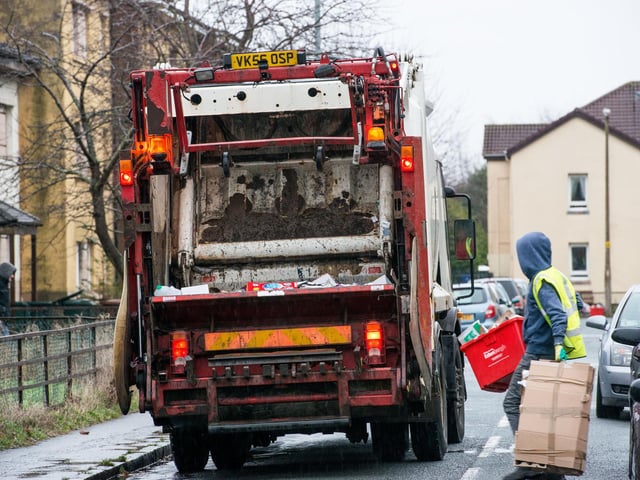
11. We create less waste than other Scottish cities
Edinburgh has the lowest level of household waste generated per person of the four big Scottish cities. On average, each person in the Capital was responsible for 0.39 tonnes of household waster in 2021, head of Glasgow and Aberdeen where the figure was 0.41 tonnes and Dundee on 0.44 tonnes. And Edinburgh was in second place when it came to the rate of household waste recycled per person at 38 per cent, with only Aberdeen doing better at 45 per cent. Photo: Ian Georgeson