
Why the Edinburgh railway along the Roseburn Path was closed
Dr Beeching’s arrival as chairman of British Transport Commission meant axe was looming
Long-standing plans for running trams to Granton, along what is now known as the Roseburn Path, have been shelved indefinitely by the city council, following the meeting of its transport and environment committee on September 10.
Most people are aware that the Roseburn Path used to be a railway line, but why is it not still carrying trains? The story is almost as controversial as the recent tram debate.
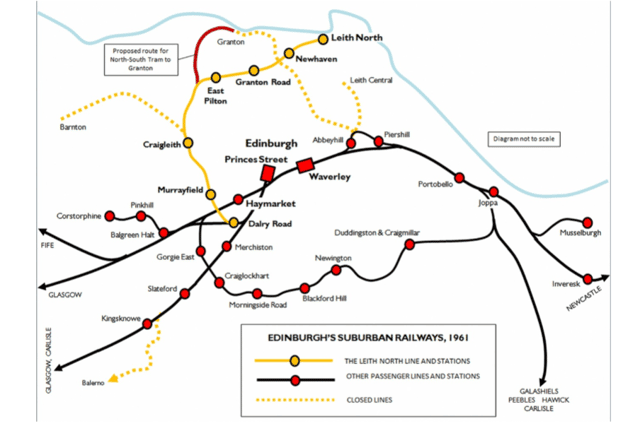

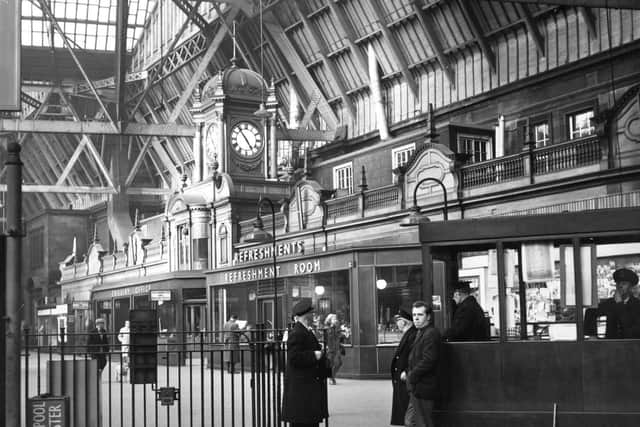
Until 1925 Edinburgh had 33 railway stations within the city boundary, including the grand old Princes Street terminus of the former Caledonian Railway, which stood behind the Caledonian Hotel.
From Princes Street Station, trains ran the five miles to Leith North (near today’s Ocean Terminal), via Dalry Road, Murrayfield, Craigleith, Granton Road and Newhaven stations, taking less than 20 minutes for the journey. East Pilton Station (near Ainslie Park) was added in 1938, and became the busiest on the line.
The Roseburn Path follows what was the section of line between Murrayfield and Craigleith stations.
Ironically it was Granton which was first to lose its train service, from Edinburgh Waverley, in 1925. More closures followed in the 1940s and 50s, but the Roseburn line lived on.
Diesel trains took over from steam engines on the service in 1958, and ticket sales soared by 42 per cent in the first year. The line was now carrying between 700,000 and a million passengers annually (depending on which of the various statistics from British Railways are used).
But by then, national railway finances were in a poor state, and sweeping economies were needed. After Doctor Richard Beeching took over as chairman of the British Transport Commission in June 1961, it soon became clear that the infamous ‘axe’ was looming.
Meanwhile, over in Glasgow, there had been huge investment in its suburban railways, based on plans dating back to the early 1950s. The new electric ‘Blue Trains’ took over services on railway lines north of the Clyde in November 1960, with many lines south of the river going electric in 1962.
Why was the same philosophy of modernisation and investment not being applied in Edinburgh?
The answers to that question are not easy to unearth, but Scotland’s railways were controlled by the Scottish Region of British Railways based in Glasgow, and the British Transport Commission in London. Edinburgh had no meaningful input to rail investment decisions, and there was an indifference towards public transport by the politicians who were in charge at Edinburgh Corporation.
Many of the Corporation’s councillors were more focused on where to build new roads and car parks in Edinburgh than on saving the city’s antiquated suburban railways. And then there was Doctor Beeching, the new boss of the railways, intent on making major cuts in train services.
In September 1961 The Scotsman newspaper broke the news that Edinburgh’s remaining suburban rail services were under threat, and formal closure proposals soon followed, with the Leith North line (the Roseburn Path route) at the top of the closure list. British Railways claimed that it would save £18,500 per year by cutting the service.
Several campaign groups were formed to try to stop the Leith closure, including the Edinburgh Suburban Travellers’ Association, set up by a local solicitor William Geddes. He managed to enlist the support of several Edinburgh MPs, both Conservative and Labour, including Leith’s MP James Hoy.
Also joining the fight was Labour councillor for Pilton, Magnus Williamson, who tried to persuade Edinburgh Corporation to object to the closure, but he was opposed by Colinton councillor Mrs Catherine Filsell, who also sat on the Corporation’s Transport Committee – which in those pre-privatisation days was directly responsible for running the city’s bus services.
The Corporation’s Transport Manager had said that the buses would have “no difficulty” in coping with the extra passengers who currently used the train, and Mrs Filsell was conscious that the buses – struggling to make a profit – could benefit from extra trade.
The battle rumbled on, with Edinburgh West’s Conservative MP Anthony Stodart even issuing a plea for retention of the Leith train service in the House of Commons on October 31, 1961.
Then came the crucial meeting, on December 1, of the Scottish Transport Users’ Consultative Committee (STUCC), at the North British (Balmoral) Hotel, to hear objections to the closure.
The STUCC was supposed to represent the interests of rail passengers, but its membership tended to reflect more the interests of businesses and other transport operators. In particular, Mrs Catherine Filsell of Edinburgh Corporation’s Transport Committee was also a member of the STUCC.
Pilton’s Councillor Williamson had been unable to persuade Edinburgh Corporation to take part in the hearing, so was not able to give evidence, but a string of other campaigners tried to make the case for keeping the train service running.
Gordon Stewart from British Railways Scottish Region then told the committee that no operational savings could be made on the line, because the guards on the train did not have time to collect fares, so all the stations had to be staffed with ticket clerks, as well as porters to help with luggage and prams.
Apparently there was no problem with conflicts of interest in those days, and Edinburgh Corporation’s Mrs Filsell – clearly far more concerned about keeping Edinburgh’s buses in profit than the needs of train passengers – announced to the committee that “I have no hesitation whatever in saying that this line should be closed as far as passengers are concerned”.
With only a few dissenters, the STUCC voted to support closure of the line.
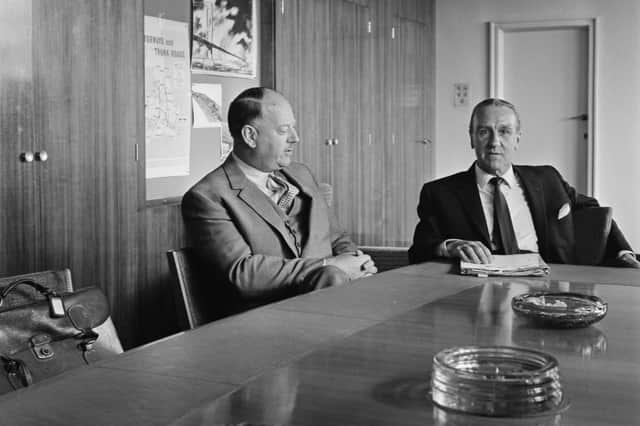
That vote meant that the final decision passed to the Minister of Transport, Ernest Marples, in London.
Despite last-minute jitters from the Secretary of State for Scotland, Jack Maclay, who was worried about the public reaction to the Leith closure, Marples gave his approval on March 16, 1962, and the line to Leith North was swiftly closed to passengers on April 30. Goods trains continued to use the line until 1967, after which the track was lifted, and the railway which used to run on the Roseburn path disappeared into history.
Since then there have been several plans to put rails back down on the route, the latest of which has just failed. There may never be another.