
AI cameras deployed on two Edinburgh roads to detect drivers using mobile phones and not wearing seatbelts

The cameras, which use AI-assisted technology to detect possible road offences, will operate 24/7 for the next month
Traffic cameras using AI-assisted technology to detect drivers using mobile phones or not wearing seatbelts will be stationed in two Edinburgh locations for the next four weeks.
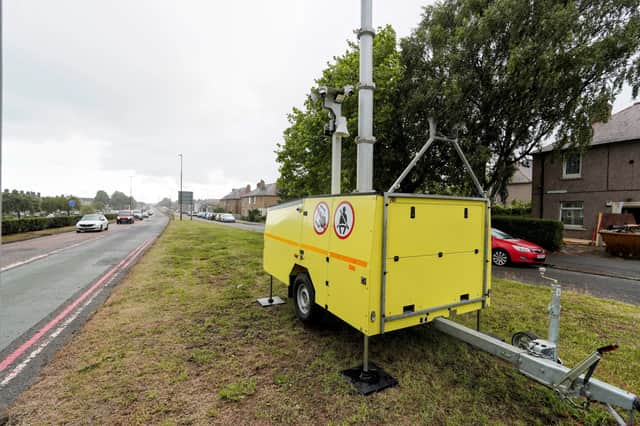
The cameras, which have been deployed at Calder Road and Silverknowes Parkway, are part of a Scotland-wide survey monitoring driver distraction and seatbelt compliance.
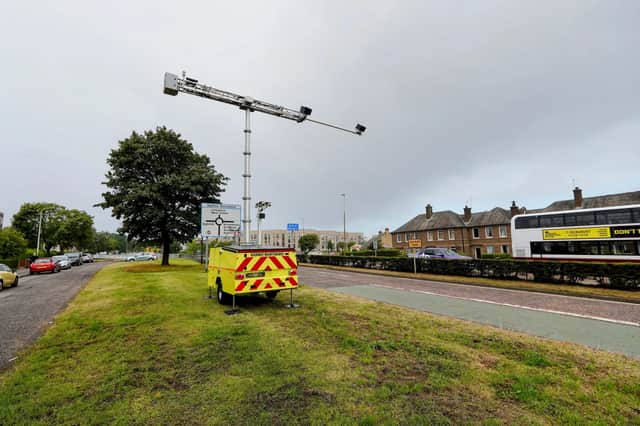

The camera systems will use AI software to identify potential offences, before being verified by human analysts.
Clarifying the use of AI technology, Edinburgh council's transport convener Stephen Jenkinson said: “It’s important to stress that this is not a new enforcement programme.
“The survey uses AI-assisted technology, with images anonymised and any potential offences subject to human review.
“The findings will help shape future road safety education and enforcement across Scotland.”
However, it is understood if any serious issues are detected they may be shared with Police Scotland for further investigation.
The cameras operate 24/7 and can capture vehicles travelling at high speed and in all lighting conditions.
Announcing the survey earlier this year, Transport Scotland said the data collected will be used to inform enforcement strategies in the future and guide road safety investment.
Geoff Collins from Acusensus, the company behind the camera technology, said: “As the UK’s largest ever survey of mobile phone and seatbelt use, this project will provide clear evidence for the scale of poor driving behaviours on Scottish roads.
“We know from existing operational schemes that this knowledge gives us a chance to change bad habits, which will result in fewer avoidable collisions and casualties.”
Dr Jamie Uff, technical director at AECOM which is analysing the data from the trial, said: “Distracted driving and failure to wear seat belts continue to kill or seriously injure far too many people on our roads every year, despite high awareness of the risk of these behaviours.
“This programme will make detection straightforward and will provide valuable insight on the current level of road user behaviour. We hope to see this technology help raise awareness and improve road safety in Scotland.”
In the road casualty statistics for 2024, almost one in four in-car fatalities involved non-seatbelt use. Meanwhile, a UK-wide survey in 2023 indicated up to 0.6 per cent of drivers use mobile phones behind the wheel and around 3.6 per cent drive without seatbelts.
Applied to Scotland’s 4.7 million daily vehicle journeys, that would suggest over 169,000 drivers may not wear seatbelts and over 28,000 may use handheld devices every day.