
Ash Regan's Prostitution Bill defeated after heated debate in Scottish Parliament
Edinburgh MSP Ash Regan’s Bill to criminalise the purchase of sex has been defeated in the Scottish Parliament after a heated two-hour debate.
MSPs voted 64-54 against approving the general principles of the Bill, which means it now falls.
The Scottish Government argued that, although it supported the criminalisation of buying sex, it had “significant concerns” about details of the Bill and there was not enough time left in this parliamentary session to deal with these.
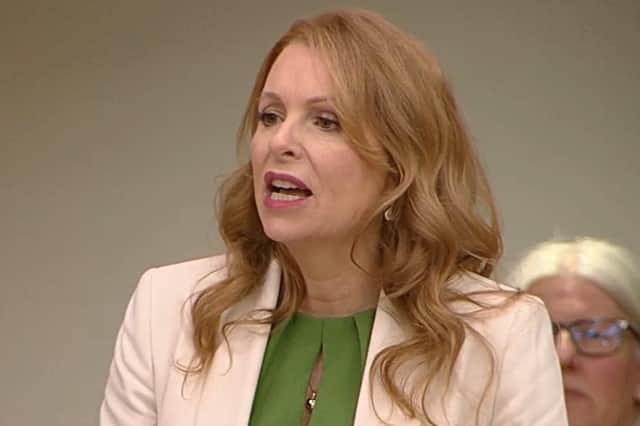

But that brought accusations that the government’s opposition to the Bill was based on a grudge against Ms Regan, who quit as community safety minister over gender recognition reform and later left the SNP.
The government said it welcomed the recommendation of the parliament’s criminal justice committee that an independent commission should be established to look into a future Bill to tackle prostitution and pledged to introduce such legislation if it was re-elected.
Ms Regan opened the debate, telling MSPs: “This Unbuyable Bill recognises prostitution for what it is - a system of exploitation and violence sustained by demand.”
As well as making it an offence to pay for a sexual act, with those convicted facing a fine of up to £10,000 and possible jail time, the Bill would also repeal the offence of soliciting, quash the convictions of those previously found guilty of that, and give those exiting prostitution the right to support.
Ms Regan said: “This Bill is not out of time, it is overdue. Exploitation is not going to wait for more reviews or more consultations or more strategies from the government.”
She said public support for the Bill was “very strong” and quoted supportive statements from Police Scotland, the Crown Office and Lord Advocate among others.
Community safety minister Siobhian Brown said women involved in prostitution had said they would be at greater risk of violence and harm if the legislation was passed and the industry was driven underground.
She said she had instructed officials to work on setting up a commission on prostitution, so the next government could make an early start. And she said if the SNP was re-elected it would establish a commission “at pace”.
“If the government is returned we will ensure that such a commission is time-limited so that legislation can be put before MSPs as early as possible, informed by the commission and public consultation. I can commit for my party that we will introduce legislation.”
But she said she could not support Ms Regan’s Bill. “There is not sufficient time to develop the proposals and amendments needed to address the very significant concerns we have.”
Green MSP Maggie Chapman said her party supported workers “including sex workers” and told the parliament: “We cannot legislate these issue away by punishing clients and, by extension, workers.”
Scottish Lib Dem leader Alex Cole-Hamilton said he supported decriminalising sex work and argued that evidence from other countries which had criminalised the purchase of sex showed it could result in the increased marginalisation of sex workers and additional barriers to accessing support services.
Labour MSP Rhoda Grant said she did not believe MSPs would agree another human being should be a commodity to be bought and sold. “I do believe there are many in the chamber who have not really thought through what prostitution is. Can I ask them, if it was their mother, their sister, their daughter that was involved in prostitution, would they see it as an ordinary job then? And how would they regard the men that paid for access to their body?”
SNP MSP Michelle Thomson, who backed the Bill, claimed the criminal justice committee had not fulfilled its fundamental role of scrutinising contested evidence.
"Parliament relies on committees to distinguish robust evidence from ideology and to discriminate between the quality and accuracy of submissions, yet this report gives them equal weight.
"As a result no credible claim can be made that there is evidence this Bill will cause harm to women - there is only the opinion of a small number.
"There is clear evidence of bias both in the committee report and the government response." She said committee members attended an event held by opponents of the Bill, but did not have the same engagement with supporters.
Independent MSP Fergus Ewing quoted poet Edwin Morgan's words at the opening of the parliament building, that Scotland did not want "a nest of fearties" or "a symposium of procrastinators".
He said previous debates on moral issues had been largely courteous, thorough and had sufficient time to do justice to serious topics. "We are not doing justice to ourselves today, we are not doing justice to the people of Scotland, but far worse we are allowing the continuance of the most vile, abhorrent abuse of women that is imaginable.”
Former Scottish Tory leader Douglas Ross questioned the government’s stance: “What is being asked is simply to agree the general principles, not to get into the detail of the Bill - and the general principles are agreed by this government. So why are they opposing it?
“It maybe comes down to politics or perhaps personalities. This government bears a grudge against anyone who steps out of line, and you don’t step out of line than resigning ministerial office and saying to the First Minister at the time, Nicol Sturgeon, that her Gender Recognition Reform Act was a mess.
“To resign from government, that has consequences - and sadly, I think, years later, the consequences are going to be felt by some of the most vulnerable women and girls in Scotland because this government is still holding a grudge against the member in charge who was brave enough to step down at that time.”
Graham Simpson, who defected from the Tories to Reform UK, echoed the point. “It’s clear to me the government is acting in this way because they don’t want Ash Regan to have any success because she had the temerity to leave the SNP.”
Concluding the debate, Ash Regan said: “It’s clear to me that the approach I’m outlining in my Bill has won the argument decisively in this chamber.
“We are told again and again that criminalising men will make women less safe. If we fail to pass this Bill we are not protecting women’s safety, we are protecting men’s violence.”