
Beware suave men charming their way to top - Bruce Whitehead
There’s a good reason why certain stories are being told again after the sharp rise in Reform’s vote. The stories that tell how suave and urbane men in suits can charm their way to menacing power...
Radio 4 has two grim accounts of life in Germany between the wars, both based on real events, and a Jewish friend urged me to read a Penguin Modern Classic which is one of the best novels I’ve read. 1946’s “Alone in Berlin” by Hans Fallada tells how a city tenement’s neighbours interact with increasing brutality and betrayal from 1940. A couple lose a son on the western front and despair leads them to a secret act of dissent, leaving postcards around the city denouncing the Nazis. Based on fact, the story ends badly as, starting with the tenement’s Jewish resident, neighbours denounce each other to the Gestapo in the desperate hope of advancement and a better life. People turn on each other as deprivation and a police state combine to destroy their humanity.

Radio 4’s “The Prisoner”, written a decade earlier by English Germanophile Sally Carson, tells a similar story of social degradation in the face of ruthless fascism which engulfed Europe. Increasingly horrified by the descent of her beloved Bavaria into paranoid subservience under Hitler’s stormtroopers, Carson wrote of a fictional family which falls apart when their daughter is killed with her Jewish lover as they flee Germany.
Radio 4 also serialises the German historian Katja Hoyer’s deeply researched novel drawn from the diary of a Weimar bookbinder, chronicling perhaps the deepest shock of all: how the crucible of German culture, Weimar, where Goethe and Schiller and Bauhaus and Liszt and Nietzsche flourished, became the first Nazi city.
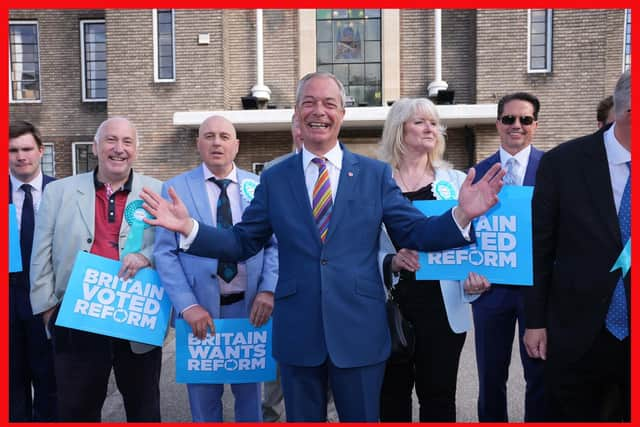
The question of how a nation that prided itself on its culture and civility enabled the catastrophe of Nazism should haunt us this month. Because the men in smart suits surrounded by security, are back. On British streets.