
Controversial Edinburgh Elsie Inglis statue approved despite protest - delighting the renowned doctor's family

Controversial plans to erect a statue of renowned Edinburgh doctor Elsie Inglis on the Royal Mile have been approved by the council.
Councillors at the City of Edinburgh Council's development management sub committee voted 7-2 in favour of the statue during a meeting on Wednesday. They also ruled out a council officials' recommendation to have a lower plinth than in the original drawings.
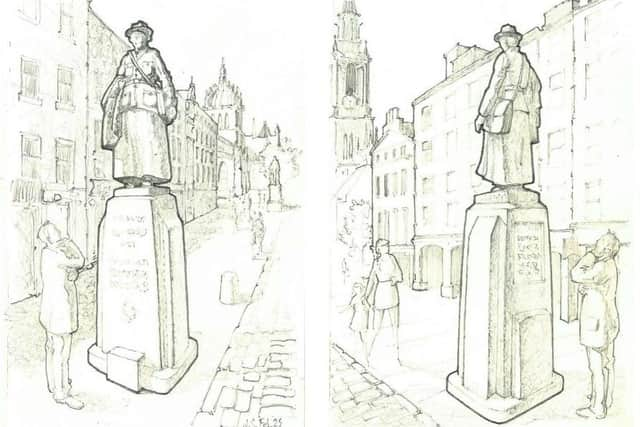

The statue will sit adjacent to New Assembly Close, opposite the commemorative plaque to Dr Inglis at 219 High Street and the site of her maternity hospital she moved there in 1904 from George Square.
During the First World War, Dr Inglis helped raise the equivalent of £53 million in today's money, and over the course of the war she established 14 hospitals on the frontlines, staffed by 1,500 women.

The great-great-great niece of Dr Elsie Inglis, Clea Thompson, told the BBC it was a "great moment for women" as it would be the first statue of a woman on the Royal Mile.
She added: “The statue is not for our family. We were persuaded that this was a bigger story about women and was a story that other people could learn about and be inspired from.
"So even though Elsie would be quite aghast, it represents not just her, it represents 1,500 women who served in the Scottish Women's Hospitals for Foreign Service.
"And it's about Scotland celebrating their leading suffragist and working towards greater equality between women and men and that is an incredible thing to be celebrating today."
However, the plans for the statue were heavily criticised, with an open letter sent to those behind the plans having claimed the statue misrepresents Dr Inglis’ legacy and disregards the historical significance of the site. The letter was signed by hundreds of people including writers Val McDermid and Sara Sheridan, and musicians Charlie and Craig Reid from The Proclaimers.
And around 20 or 30 protesters gathered outside the City Chambers on Wednesday morning (see video above) while the application was being discussed at the development management sub-committee meeting.

Natasha Phoenix from the Elsie on the Mile protest group was delighted that people turned up to voice their objections to the statue plans in the current format, and she questioned the lack of transparency over the public consultation.
Speaking before councillors approved the statue, she said: “We are here today because public voices have been silenced, the charity closed their Facebook page and website and since then there’s been no public dialogue.
“It’s important that all stakeholders are consulted but we’ve identified that only one out of 13 have been consulted. And we’ve identified planning policy that’s not been followed.”

The planning application was referred to the Development Management Sub-Committee meeting by the council’s planning department because the application is of significant public interest, with 647 public representations received for this planning application - 237 in objection, 408 in support and two taking a neutral stance.
Elsie Inglis was not born in Edinburgh, but she was educated and spent much of her life in the city. Inglis was a doctor and suffragist, who tirelessly campaigned for better rights and specifically medical care for women.
Thousands of people lined the streets of Edinburgh before her funeral in 1917, which was held at St Giles Cathedral in Edinburgh and was attended by royalty.