
Edinburgh MSP asks how Police Scotland will handle protests in support of Palestine Action
Scottish Lib Dem leader Alex Cole-Hamilton is asking Scotland's chief constable how she plans to police protests over events in Gaza after Palestine Action was proscribed as a terrorist organisation.
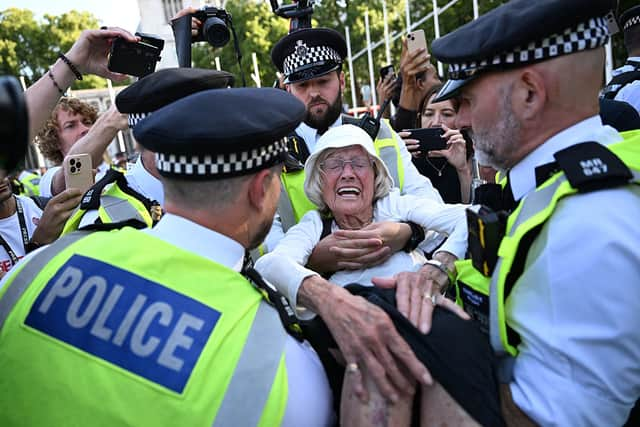
At a protest march in London last weekend, where demonstrators carried placards saying "I support Palestine Action", 522 people were arrested on suspicion of breaking terrorism laws.
According to the police, their average age was 54 and 112 of them were over 70.

Thousands of pro-Palestinian protesters marched through Edinburgh on July 19 and police later said two men had been arrested under the Terrorism Act 2000 for showing support for a proscribed organisation, with a third arrested near the Scottish Parliament two days later.
Mr Cole-Hamilton, who is MSP for Edinburgh Western, said there was potential for a "massive" waste of police time, which would be better spent tackling violent and antisocial offenders.
He said: “Proscription must be applied carefully and proportionately, or we risk undermining public trust and civil liberties. The right to peaceful protest is a cornerstone of a liberal democracy.
“It has clearly been incredibly uncomfortable for police officers to be asked to arrest peaceful demonstrators. This sets a dangerous precedent and risks a chilling impact on free speech and legitimate protest.
“It cannot be right that elderly members of groups like Palestine Action are placed in the same legal category as ISIS."
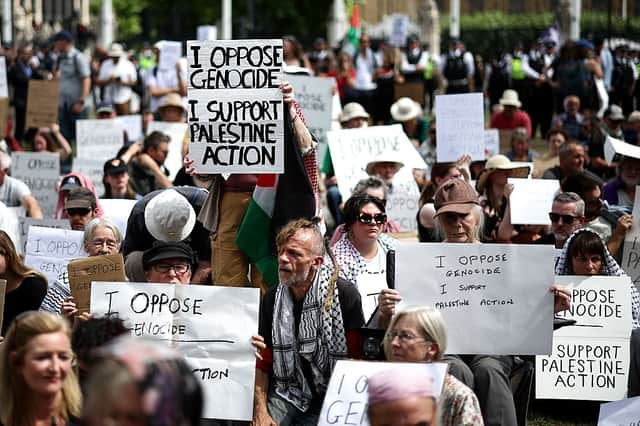
Palestine Action was designated a terrorist organisation last month after two Voyager military aircraft were vandalised at RAF Brize Norton in Oxfordshire on June 20. Its proscription means membership of, or support for, the group is a criminal offence punishable by up to 14 years in prison.
Mr Cole-Hamilton called for an urgent review of terrorism legislation to ensure it is proportionate and nuanced.
He said: “Serious criminal offences such as vandalism of military equipment and RAF aircraft deserve accountability under the law, but these powers should be reserved for tackling those who endanger the UK's defence and security, rather than for heavy handedly removing protesting pensioners from public spaces.
“If these protests spread to Scotland, this has the potential to be a massive waste of time when officers and court officials would be better off tackling violent and antisocial offenders."
In his letter to Chief Constable Jo Farrell, he asks what approach Police Scotland would be minded to take if similar protests to the one in London last weekend were staged in Scotland.
He writes: "Obviously, I would not expect you to involve yourself in the debate around proscription per se but I hope you might agree with me that it does raise legitimate questions of balance around policing protests involving those who have taken a different view from the one reached by the Home Secretary."
He argues it "can only hinder the fight against terror" if the law is seen as being aimed "at people whose intention is to exercise their constitutional rights to protest".
He says Police Scotland has an opportunity to learn from the experience of the Metropolitan Police.
And he concludes: "I’m keen to understand how Police Scotland intends to navigate the tension that exists here between free speech, policing by consent and the demands of this legislation."