
Take public health approach to homelessness - Ewan Aitken
It was with some horror that I read last week that councils across Scotland spent more than £100 million last year on B&B and hostel accommodation for people experiencing homelessness.
Scottish Government figures, meanwhile, showed that the number of households in temporary accommodation increased by 6 per cent over the year to September 30, 2024, when the total stood at 16,634.
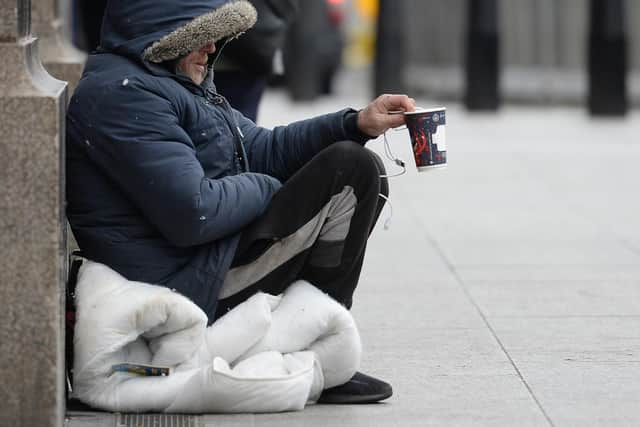

These are big numbers. Behind them are very real, individual human stories. Like the woman who I came across recently who had lost her home having lost her job due to ill health.
Or the veteran whose PTSD took him to a place where his relationship broke down and he had to leave the family home.
Or the young person who had been in the care system. They’d had a tenancy but struggled when anything went wrong with the house and ended up leaving because they couldn’t cope with the stress. As they said to me “I’m not like my mates who just call their mum or dad - I don’t have anyone to call when stuff goes wrong.”
The journey to homelessness starts in many places. Homelessness is a late marker of a lot of events in someone’s life, many of which, had there been the right support available when it happened, homelessness would not have been the eventual outcome.
Like the young woman and her mum whom I met at an event. She’d been about to leave home because she and her mum were fighting, as she put it, “all day, every day about everything. Sometimes we couldn’t stand to be in the same room as each other”.
They’d got a referral to our mediation service who over a few months helped her and her mum stop fighting and, as she put it, “stop reacting and start listening”.
Our service doesn’t fix things for families in conflict. We create the space for family members to fix things themselves. Now this young woman and her mum are so close they talk at events about their experiences to encourage others to take the same journey of reconciliation through mediation.
But that only works if services like ours are available where people need them, in places they can access freely and without stigma.
And in a political context where all political and media focus is on the crisis – just as I have done in the first two paragraphs - securing funding for services which stop things happening in the first place is much harder to achieve.
Statistics which show how many people were helped to avoid homelessness are not headline grabbers or useful as a political weapon, in the way that “£100m spent on B and B’s” or “6 per cent rise in use of temporary accommodation” is.
These statistics are accurate and we need to know them but the answers to lowering them (for there is no one answer) lie in very different places, often far away from the crisis.
This is why my organisation Cyrenians is calling for a Public Health Approach to Homelessness Prevention. We know that there are groups of people, whose circumstances mean they are more likely to end up experiencing homelessness.
Focusing funding on supporting them in ways which reduce that likelihood is the only way we will end homelessness. Otherwise those numbers are just going to keep getting bigger and bigger.