
How can family conflict be resolved?
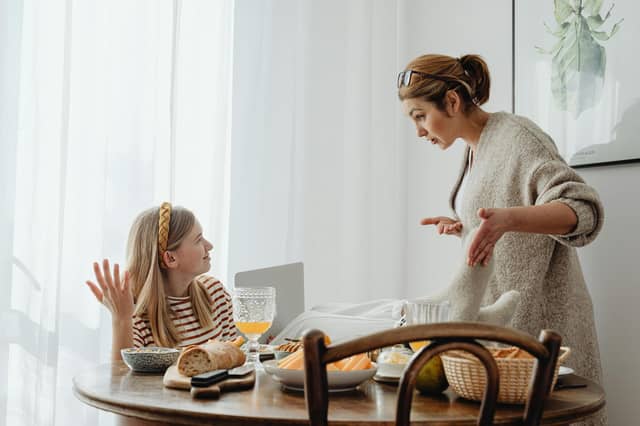

When your teenager slams the door for the third time that week, rolls their eyes at a simple question, or mutters something under their breath that you can’t hear but don’t like the tenor of anyway, STOP!
Take a deep breath and think about what you say and do next. Yes, you’re upset. Confused. How did that lovely, loving little kid of yours turn into what feels more like a sparring partner?
You’re not alone. Pretty much every parent of a teenager has felt something like you have. You can’t avoid conflict, it’s part of life – but you can work on how you respond to conflict with the family.
Cyrenians Scottish Centre for Conflict Resolution (SCCR) has recently launched a new online resource called The Learning Zone for Parents and Carers. It’s designed to help families navigate the stormy waters of adolescence and come out stronger on the other side.

‘We know that home is where most conflict happens,’ says Jim Gray, SCCR Service Manager, ‘but that doesn’t mean it has to tear families apart. The Learning Zone is about giving parents and carers simple, accessible tools to communicate better, manage emotions, and reduce tension at home.’
One of the central messages of the Learning Zone is that conflict isn’t a sign of failure — it’s just another part of family life. ‘Strong families aren’t those without conflict,’ reads one of the resources, ‘they’re the ones who learn to manage it.’
Rather than aiming for a peaceful household at all times, the goal is to build the skills to handle disagreements with empathy and clarity.
This starts with small changes in communication. Instead of saying, ‘You never listen,’ parents are encouraged to try, ‘I feel hurt when I don’t feel heard.’ It’s a technique known as using “I-statements” rather than placing blame — and it’s surprisingly effective. By focusing on how you feel, rather than what someone did, you reduce defensiveness and open the door to dialogue.
Another key insight from the Learning Zone is that teenagers aren’t just being difficult for the sake of it. Their brains are undergoing major changes during adolescence, especially in the areas responsible for decision-making, impulse control and empathy. This means that when a teen lashes out, it’s not personal — it’s developmental. Remembering that a teenager’s emotional volatility is a phase of growth — not defiance — can help parents respond with compassion instead of anger.
Of course, understanding your teen doesn’t always mean you can stay calm in the heat of the moment. The Learning Zone includes a dedicated ‘Wellbeing and Coping’ section for parents and carers, offering strategies to regain composure when emotions run high. A parent who can’t stay calm can’t model the behaviour they’d ideally like their young person to learn.
One way a parent can restore his or her sense of calm is through the practice of ‘sitting with your emotions’. Rather than bottling things up or reacting immediately, parents are encouraged to pause, notice their feelings, and allow themselves to experience them without judgement. This mindfulness-based approach helps avoid knee-jerk reactions and allows time to choose a more thoughtful response.
There’s also a simple breathing exercise to help ground you in the moment: breathe in a calming colour for four seconds, imagine it filling your body, then breathe out a different colour for four seconds. Repeat until calm. It might sound basic — but it works.
And sometimes, the best thing you can do is walk away. A short break — a walk, a chat with a friend, a trip to the gym — can provide just enough distance for both you and your teen to cool down and gain perspective. Conflict rarely resolves itself when both parties feel overwhelmed.
The Learning Zone isn’t just about managing arguments — it also promotes proactive approaches to building connection and trust. One practical tip is to hold regular family meetings. These aren’t just for sorting out problems; they’re a chance to share, listen and plan together. Having structured time to talk can prevent small issues from building into major clashes.
The Learning Zone is freely available on SCCR’s website and was created with input from parents, carers and professionals across Scotland. It’s practical, non-judgemental and rooted in real-life experience.
Though designed for those caring for teens, the advice resonates across a range of relationships. Whether you're a grandparent, foster carer, teacher, or social worker — there’s something in the Learning Zone for you.
For social workers, it’s a resource to recommend to families in stress. For educators, it complements work being done to support young people’s emotional wellbeing in schools. And for parents navigating the messy, beautiful work of raising a teenager — it’s a reminder that you're not alone, and that there are kinder, more constructive ways forward.
Conflict in families can be painful, but it’s also an opportunity for growth. With support and understanding, it’s possible to transform those challenging moments into chances for connection.
As the Learning Zone reminds us: 'Keeping your cool doesn’t mean bottling things up — it means finding healthier ways to cope, reflect and reset.'
Visit https://www.scottishconflictresolution.org.uk/learning-zone-parents-and-carers-landing to explore The Learning Zone for Parents and Carers and discover tools to help your family move from conflict to connection.