
Edinburgh Low Emission Zone raises over £1 million for council in first year of operation
Edinburgh's Low Emission Zone raised more than £1 million in its first year of operation.
And after the costs of running the the scheme, it left £793,000 which has been allocated to a range of initiatives, including work with schools on air pollution.
The LEZ annual report showed that 40,945 fines were issued between June 1, 2024, when the scheme came into force and the end of the financial year March 31, 2025. Seventy per cent of the fines were paid and the money raised totalled £1,050,780.
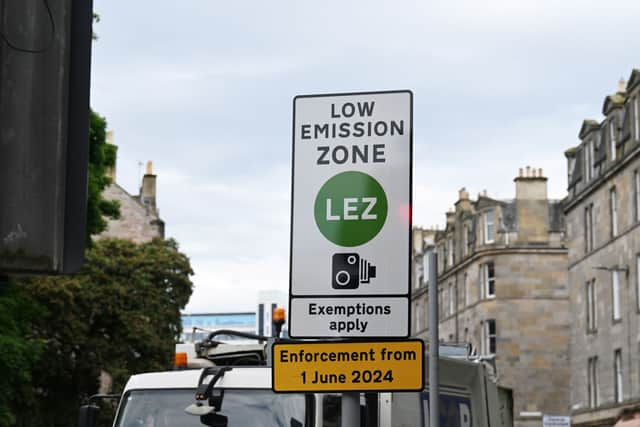

First offenders are fined £60, but that is reduced to £30 if paid within 14 days. If motorists repeat the offence within a 90-day period, the penalty doubles each time – up to a maximum of £480 for cars and light commercial vehicles and £960 for heavy duty vehicles.
But one-third of the noncompliant vehicles could not be issued with a fine because of inaccurate DVLA records, which meant the council missed out on another £800,000.
The LEZ covers a 1.2 square mile area of the city centre, stretching from Queen Street in the New Town to Melville Drive on the other side of the Meadows and from Palmerston Place at the west end to Abbeyhill and the Pleasance in the east - but these streets which mark the boundary remain outside the zone. Vehicles which do not meet strict emission standards are banned from entering the zone.
The first-year operating costs for the scheme were £552,789, but the Scottish Government paid £295,196 towards them. And the council was left with a surplus of £793,187, which the legislation requires to be used for the wider aims of the scheme.
Projects to be supported with the extra cash include activities with schools for Clean Air Day and Clean Air Night, focusing on air pollution and climate change, at the two school closest to the LEZ boundary, Preston Street and Tollcross primaries, as well as a campaign to tackle engine idling.
It will also fund market research to understand if behaviour and perceptions have changed since the LEZ came into force, to tailor future communications.
And some of the surplus will be used to support the city’s 7-7-7 bus lane trial; and the business case for the North-South tramline.
Transport and environment convener Stephen Jenkinson said: “This report underlines the real progress that’s been made since LEZ enforcement began. I have no doubt that this new revenue will unlock many new and exciting projects which will benefit residents across the city.
“As Scotland’s capital city, we have a core responsibility to combat the climate and nature emergencies. Fundamentally though, the LEZ is about making our city healthier for everyone.
“Multiple studies show that even low levels of pollution can have an impact on our health, with road traffic being one of the main sources of harmful emissions.
“We’ll continue to encourage people to use active travel and public transport wherever possible, whilst reducing their car use and considering lower polluting vehicles. Our commitment to this can be seen in new developments like the trial cycle hire scheme along with projects under our City Mobility Plan, giving our residents greater choice and creating a better city for us all.
“The latest air quality data, average decrease in PCNs, and positive shift towards greater use of active travel and public transport, shows clearly that we’re headed in the right direction.
“The LEZ remains an important tool to help us achieve our ambitious climate goals, including net zero emissions by 2030.”