
Edinburgh planners give final approval to turn 'UK's earliest' purpose-built car factory into 28 townhouses

Edinburgh planners have granted final approval to turn the 'UK's earliest' purpose-built car factory into 28 townhouses in Granton, after developer contributions of nearly £50,000 were agreed.
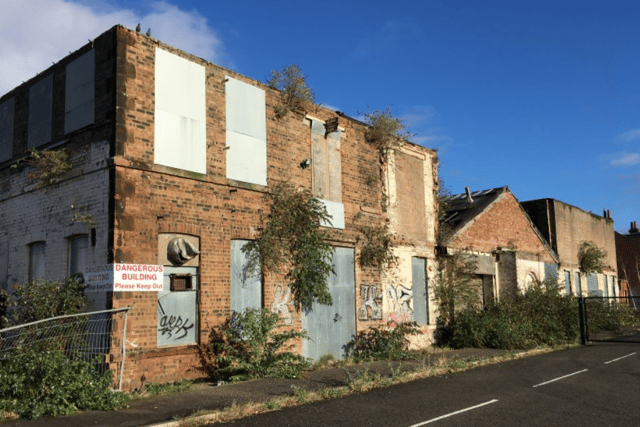
The production block on the Madelvic House estate in Granton has stood for almost 130 years, and is believed to be the first purpose-built automobile factory in the UK. It was also home to the United Wire Works for more than 75 years.
Social housing company Lar Housing Trust, which submitted proposals in 2024 to convert it into two banks of 14 townhouses, divided by a courtyard that was part of the factory, was granted final planning permission on April 2.
This comes after a legal agreement was signed for the applicant to pay £48,062 in developer contributions, which is £1716.50 per unit, for active travel infrastructure and mobility hub provision.

The council’s chief planning officer David Givan said: “The proposals would preserve the special architectural or historic character, integrity, appearance and setting of the listed buildings and therefore are acceptable.
“The principle of the proposed development is acceptable in this location and satisfies the requirements of the Local Development Plan.
“Subject to recommended conditions, the proposals are acceptable and comply with National Planning Framework 4 and the LDP. There are no other material considerations which outweigh this conclusion.”
Approval was granted with seven conditions, including that a site survey, a programme of archaeological works and phasing schedule must be submitted to the planning authority before construction work begins.
The plans, which include partial demolition, had been recommended for approval by council officers last July, and listed building consent for the plans was granted in November.
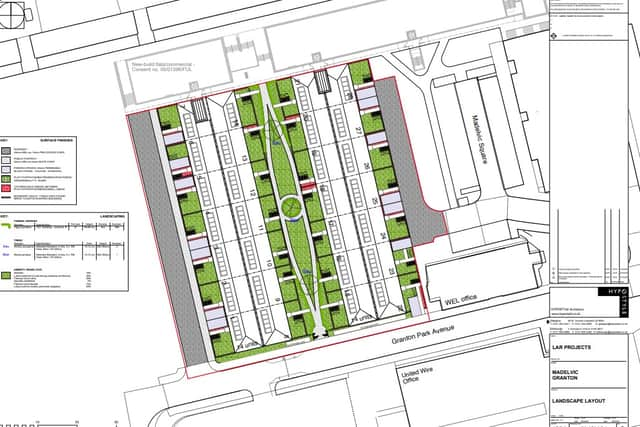
The approved proposals include demolishing the central dual pitch roof complete with the two gables. The original doorway and porch at the southern gable will be retained, while the existing flat roofs from both ranges will be removed.
The transformation will work within the existing building envelope, focusing on internal alterations, subdividing the space into residential homes over two storeys, maintaining the floor levels and fenestration patterns of the original building.
In the planning documents, the applicant said: “The reason for the proposed alterations of the former production block is that it is necessary for economic and other reasons to enable the restoration and conversion of the building to go ahead.
“The building is no longer wind and water tight, and water ingress is beginning to seriously degrade the building fabric.
“Twenty years have passed trying to achieve the restoration of the former production block, and alternative development uses for the building such as artists’ studios, offices, hotel, care home and art gallery have been explored with developers but without success.
“There is a strong economic case for the partial demolition of the building on the grounds that it is necessary to fund the restoration and conversion of the remaining part of the building.”
The plans received two objections on the council's online planning portal, with concerns raised about the design of the townhouses, the look of the proposed bin stores, and parking.
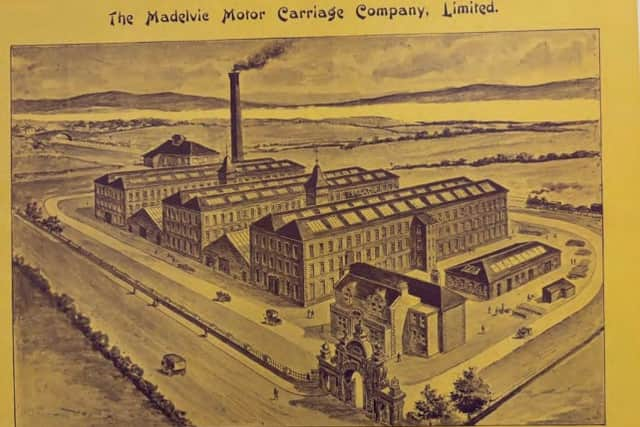
According to National Transport Trust, the Madevlic Works in Granton was the oldest purpose-built car factory in the UK, opened in 1898 by the Madelvic Motor Carriage Company, which was founded by Edinburgh City Astronomer William Peck.
A series of companies continued automobile manufacturing on the site until 1911, after which it went dormant. During the First World War, the site was used for torpedo storage – however it fell out of use again after hostilities ceased.
From 1925 until 2001 it was home to the United Wire Works, becoming its Granton Factory, being used to produce wire cloth. The company still runs a factory on the former Madelvic estate, however it is located elsewhere on the property, and runs at a smaller scale.
For the latest public notices from your area, please visit: https://publicnoticeportal.uk/