
Regional solutions to regional problems - Jane Meagher
The Programme for Government has caused quite the stir. There were several significant announcements, most notably the reduction of the number of health boards in Scotland to just two, and the proposal to move social care out of local control and into the hands of these newly formed health boards.
From my perspective, a notable announcement related to public service reform and the launch of a short consultation with authorities on what this might mean for local service delivery

Some of my peers in other parts of Scotland are worried about how this will affect them and the people that they serve. I understand those concerns, but I have also long been an advocate for greater regional working and I believe this gives Edinburgh and our neighbours the opportunity to gain the powers we need to grow our economy to the benefit of Scotland as a whole.
Edinburgh’s travel to work area does not stop at the city boundary. Our economy is truly regional and issues such as housing, transport, planning and infrastructure need to be co-ordinated regionally. This is of national importance as the Edinburgh City Region has contributed 48 per cent of Scotland’s economic growth over the last 20 years.
The Edinburgh and South East Scotland City Region Deal is commonly regarded as the most successful City Region Deal. This is fantastic and I know that officers and politicians across the region are committed to continue working closely together for the benefit of all our residents. However, with more powers we would be able tackle some of our more difficult problems.
There are problems which require national solutions and others that need local solutions but there is a significant and growing case for some challenges to be dealt with regionally.
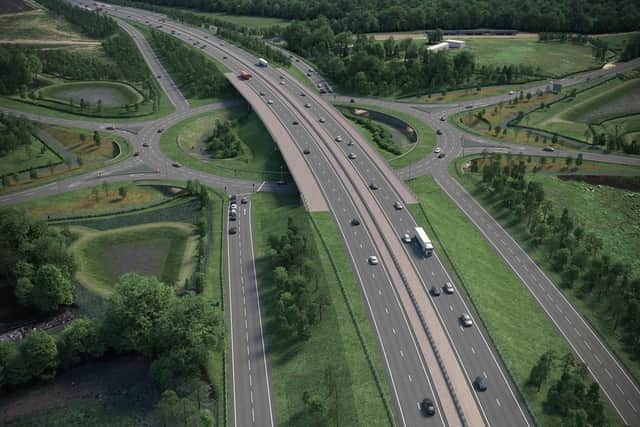
Transport infrastructure is a good example. The Sheriffhall Roundabout is a critical piece of infrastructure that affects people travelling between at least three local authority areas. If we had the powers to address this at the regional level, we would be able to make progress significantly faster than we can now.
Education and skills training is another example; regionally we could identify the skills that are in demand and address any gaps through our schools and colleges.
The need in Edinburgh and the surrounding areas is likely to be different from that in other parts of the country, so a one size fits all approach is likely to miss the mark.
It is encouraging that the First Minister seems willing to make some of the necessary changes to empower Scotland’s regions to provide more and better services for our residents.