
Susan Dalgety: Bayeaux is great, but the Craigmillar Tapestry is priceless
Tapestry is an ancient and beautiful craft. Henry VIII is said to have had 2000 hanging in his various palaces, and the Bayeaux Tapestry – which has just arrived in London for a 10-month stint at the British Museum – is one of the great wonders of the world.
I was lucky enough to see it in its Normandy home town a couple of years ago, and it is the most stunning piece of work. I am also a big fan of artist Grayson Perry’s contemporary tapestries, where he weaves images of modern life into magical works of art.

Over the years I have even tried my hand at the craft. My latest attempt, which I started five years ago, is a portrait of David Bowie. It sits next to my bed, staring at me every morning and evening as a reminder of yet another unfinished project.
I promise myself I will complete it one day, but that is what I said about my eldest son’s first school jumper which I started knitting in 1981. It was his 50th birthday earlier this month and the jersey is still not finished.
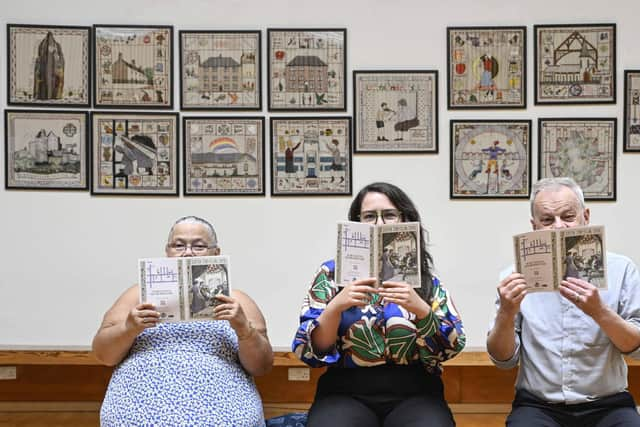
Thankfully, the good folk of Craigmillar and Niddrie are more committed to their art. More than 500 contributors got together recently under the leadership of artist Andrew Crummy – who also designed The Great Tapestry of Scotland – to weave 20 panels which tell the story of this vibrant community.
The panels include Syrian stitching by new residents, local landmarks such as the Neolithic Niddrie Standing Stone and Craigmillar Castle, as well as historic figures including Agnes Moffat, a young labourer in the local coal mines whose testimony in 1842 helped expose the cruelty of child labour.
The Craigmillar Tapestry may not be as famous as the Bayeaux panels, nor have the price tag of a Grayson Perry work, but as an important piece of Edinburgh history and an example of the power of community spirit, it is priceless.
It is on show during the Fringe at the Scottish Storytelling Centre on the High Street, where it is centrepiece of the Centre’s 20th anniversary celebration. And the good news is the exhibition is free – unlike tickets for its French counterpart, which are £33 each.