
Police officers want more powers to tackle antisocial behaviour on e-bikes and e-scooters
Rank-and-file police say law must be strengthened in face of growing problem
Police officers today called more powers to deal with antisocial behaviour linked to e-bikes, including being able to order people to remove face masks.
The Scottish Police Federation (SPF), which represents rank-and-file officers, said police currently had only “limited powers” to take action and argued that the law should be strengthened.
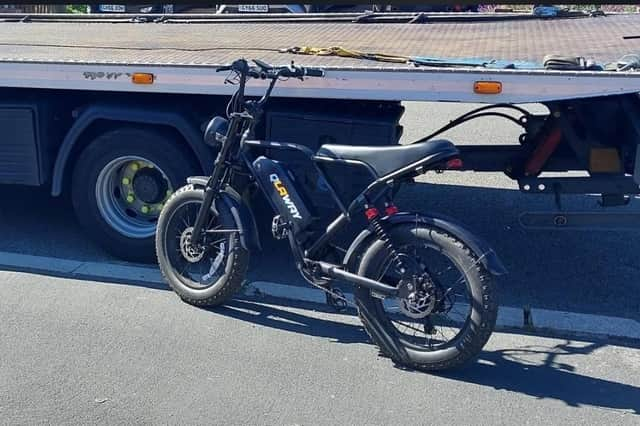

The call came as the Scottish Parliament’s criminal justice committee announced it would hold an inquiry into crime and antisocial behaviour associated with e-bikes and e-scooters and Edinburgh North Eastern & Leith MSP Ben Macpherson said such behaviour had “negatively impacted the lives of too many local people”.
Mr Macpherson has also said violence, public disorder and harassment by youths in balaclavas cannot be allowed to continue. And Edinburgh Conservatives have called for a balaclava ban in the city centre.
Many e-bikes are too powerful to qualify as an electrically-assisted pedal cycle and instead fall under laws for motorcycles and mopeds, requiring a licence and insurance.
Police have powers to seize vehicles being used illegally, issue fines and report riders for road traffic offences.
The number of e-bikes and e-scooters seized by Police Scotland has risen by more than 60 per cent in a year.
David Threadgold, chair of the Scottish Police Federation, speaking to 1919 Magazine, said: “The increased antisocial use of e-bikes and e-scooters has been a real concern for communities in Scotland and a real challenge for the police to deal with.

“The number of options the police have to deal with people who are riding these types of vehicles dangerously is extremely limited.”
He said police needed the power to stop and require people wearing face coverings to remove them. And he added: “The risk presented to the public and to police officers trying to stop it means we have to deal with this very quickly.”
The SPF also echoed a warning from the community safety partnership in one part of Scotland that parents should think carefully before giving e-bikes or e-scooters as Christmas presents.
Inverclyde community safety partnership advised parents they should make sure they fully understand the legal position, safety risks and potential liabilities associated with e-scooters and electric bikes before making any purchase decision.
It added: “Many parents may not be aware that privately owned e-scooters cannot legally be used on roads, pavements, cycle paths, parks or other public places. They may only be used on private land with the landowner's permission.
“Most high-powered electric bikes, including some models marketed towards young people, are also not legal for use on public roads unless they meet specific legal requirements. What may appear to be a toy or recreational item can, in many cases, be treated in law as a motor vehicle.”
Mr Threadgold said: “Parents need to be aware of the risks attached to buying any motorised vehicle. There are very clear conditions about where and when these things can be legally used. The challenge comes more when these things become modified past the speed limit.”
Latest figures show Police Scotland has seized well over 1,000 e-bikes and e-scooters so far this year. A week of action targeting their illegal use across the country saw 99 e-bikes and 43 e-scooters seized, taking the total to 660 e-bikes and 484 e-scooters.
Superintendent Andy Barclay, deputy head of road policing, said: “We know this is a growing issue across Scotland and the week of action shows how seriously we are taking it.
“We are very clear that illegally modified e-bikes are dangerous and not suitable for the public road. They pose a risk to their own riders, the emergency services and other road users, particularly pedestrians.
“We also want to make sure that people are aware of the legislation and their personal responsibilities if using an e-bike or e-scooter.”
E-bikes can legally be used on public roads if they meet specific requirements, including that the motor should not be able to propel the bike at more than 15.5mph and must have a maximum power output of 250 watts.
Vehicles that exceed these limits are classed as motor vehicles, meaning the rider must hold a full UK driving license, have insurance, and wear an approved helmet.