
The hidden medical condition Hibs star battles on a daily basis - ‘it’s genuinely a full-time job’

Defender reflects on his lifelong battle with diabetes, the impact on his football career and why he hopes his story can inspire the next generation
There is a familiar routine to the preparation of a professional footballer. Training, recovery, nutrition and tactical analysis all form part of the pursuit of peak performance. For Hibs defender Jack Iredale, however, that routine comes with an additional layer of complexity.
Long before considering the opposition or preparing for a match, the left-sided centre-back must account for his blood glucose levels, diet and the impact of strenuous exercise on his condition.
Diagnosed with Type 1 diabetes at the age of 12, the former Australian youth international has established himself in professional football while managing a condition that remains an integral part of his daily lifestyle.
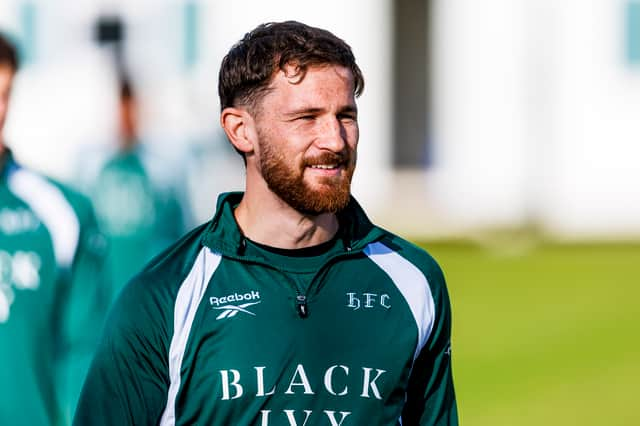

In an illuminating conversation with former Hibs midfielder Scott Allan, who also has Type 1 diabetes, for Sky Sports, Iredale reflected on the circumstances surrounding his diagnosis and the realities of competing at the highest level.
Initially, his family suspected he had contracted a virus after he spent a fortnight feeling unwell, losing weight and experiencing persistent thirst.
“I remember I was feeling really rubbish for about two weeks and we thought it was just, you know, the flu or a bug or something like that, but at the same time I was losing loads of weight,” he recalled. “I was experiencing all the classic symptoms.”
A subsequent visit to the doctor revealed a glucose reading of approximately 32, prompting an immediate hospital admission and a week of learning how to manage the lifelong medical condition.
What followed was an adjustment that would influence almost every aspect of his life, including his eventual progression into professional football. For an athlete, the relationship between physical exertion and blood glucose levels presents particular complications. Fluctuations can affect energy, concentration and recovery, adding another responsibility to an already demanding profession.
“Honestly, it's genuinely a full-time job,” Iredale admitted. “You can't switch off from it and you can understand why so many young people that get diagnosed really, really struggle with it.”
Advances in medical technology have made a significant difference, particularly since he moved to the Omnipod 5 insulin delivery system around a year ago. Working alongside his FreeStyle Libre 2 glucose monitor, the hybrid closed-loop system tracks his readings and automatically adjusts insulin delivery to help maintain more consistent levels.
“Thankfully with the technology now it makes it a lot easier,” explained the 30-year-old. “But the whole time leading up to training you're thinking about what your sugar levels are, what you're eating. If my glucose is high I'm going to feel really fatigued, if I'm low I can't really concentrate. You need to be in a perfect zone and that's another major stress on top of already trying to perform at an elite level.”
The consequences were particularly evident during a visit to Ibrox last season, when Iredale struggled to raise his blood sugar levels during the warm-up. Despite consuming three full bottles of Powerade, he remained concerned before informing the coaching and medical staff. An additional carbohydrate gel and another drink were provided, but the problem persisted into the opening stages.

“I went out there and for the first 10 minutes I felt horrific,” he stated. “Big [Youssef] Chermiti was turning me inside out honestly and I remember the gaffer was shouting at me, asking if I was okay. I said 'gaffer, I'm low' and he said 'if you can't get better I'm going to have to bring you off'. I said 'no, just give me one minute to see if it fixes' and thankfully it just clicked. But that was the lowest and the closest I've got to having to stop playing in the game.”
The effects of diabetes can also extend beyond a game of football, with the fatigue associated with hypoglycaemia sometimes carrying into the following day and complicating recovery.
It is one reason why Iredale and Allan are keen to share their experiences. The Hibs defender, who has made 64 appearances for the club, acknowledged that seeing other footballers manage the condition had provided inspiration during his own career.
Allan, meanwhile, believes greater visibility can offer encouragement to younger people facing similar challenges.
“When I came through here in Scotland and I managed to make a name for myself, I wanted to get the word out because it does help,” the former midfielder stated. “Because then whether it was kids with diabetes, they then can relate to someone that gives them a bit of inspiration.”
He added that the psychological demands of managing diabetes alongside elite football were often misunderstood, particularly on matchdays.
There is, however, a more celebratory side to their shared experience. Both players have enjoyed the satisfaction of scoring in Edinburgh derbies, providing memories that help put the challenges into perspective.
Asked whether his own memorable derby goal against Hearts at Easter Road made the difficult moments worthwhile, Iredale was unequivocal.
“That was the best day that I've ever had as a footballer,” he grinned. “Sometimes you really do need just to sit back and think how far you've come on a journey like that. That was definitely one of the days where I thought, considering everything that I've had to go through to get to that stage, I'm actually doing all right.”